Journal
What is the Luxxe Interiors design style?
13 August 2026 · 9 min read
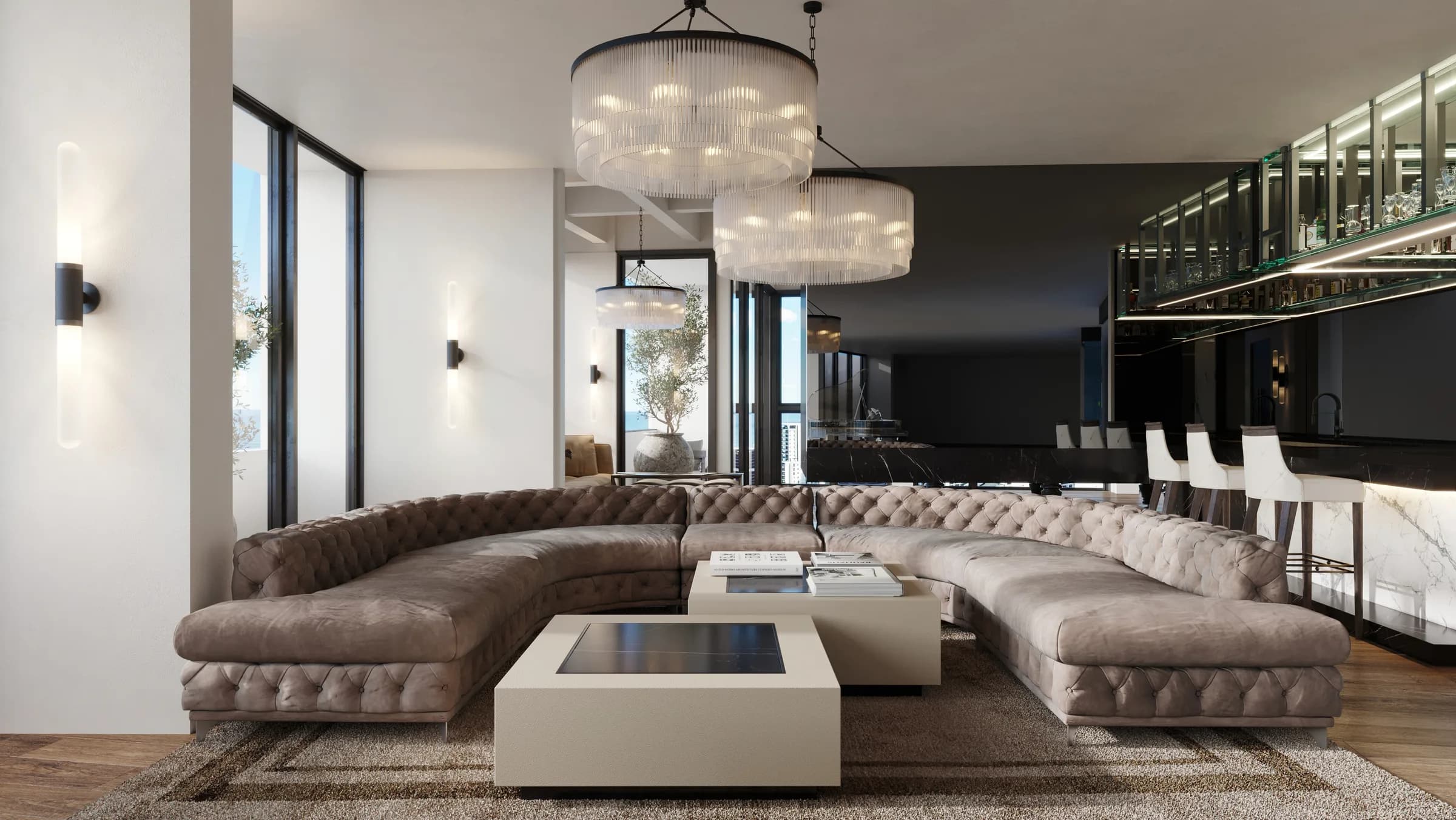
Luxxe Interiors has a defined design style. Principal designer Tammy Brazel describes it as a set of recurring choices rather than a fixed label. Those choices are sculptural natural stone, custom furniture, precise architectural joinery, warm neutral layers and light used to shape space. The result is contemporary luxury with a strong sense of form.
That distinction matters. A signature style does not mean every home gets the same arches, the same colours or the same sofa. It means the designer sees rooms in a consistent way. Luxxe Interiors gives materials visual weight, draws furniture as part of the architecture and plans the lighting with the room from the first sketch. Those habits hold even when the historical reference or the location changes.
The short answer: sculptural, bespoke contemporary luxury
The shortest description is sculptural, bespoke contemporary luxury. Sculptural means the main elements have deliberate form. A kitchen bench becomes a faceted object rather than a plain rectangle. A stair appears to float. A curved sofa completes the geometry of a room instead of filling a gap in it.
Bespoke means the studio designs the key pieces for the home. That might be a marble island, wall panelling, a bed, a vanity, a dining table or a whole furniture setting. Contemporary describes the clarity of the result. Even when the reference is French or neoclassical, Luxxe Interiors edits the detailing rather than reproducing a period set.
1. Natural stone is composed, not simply specified
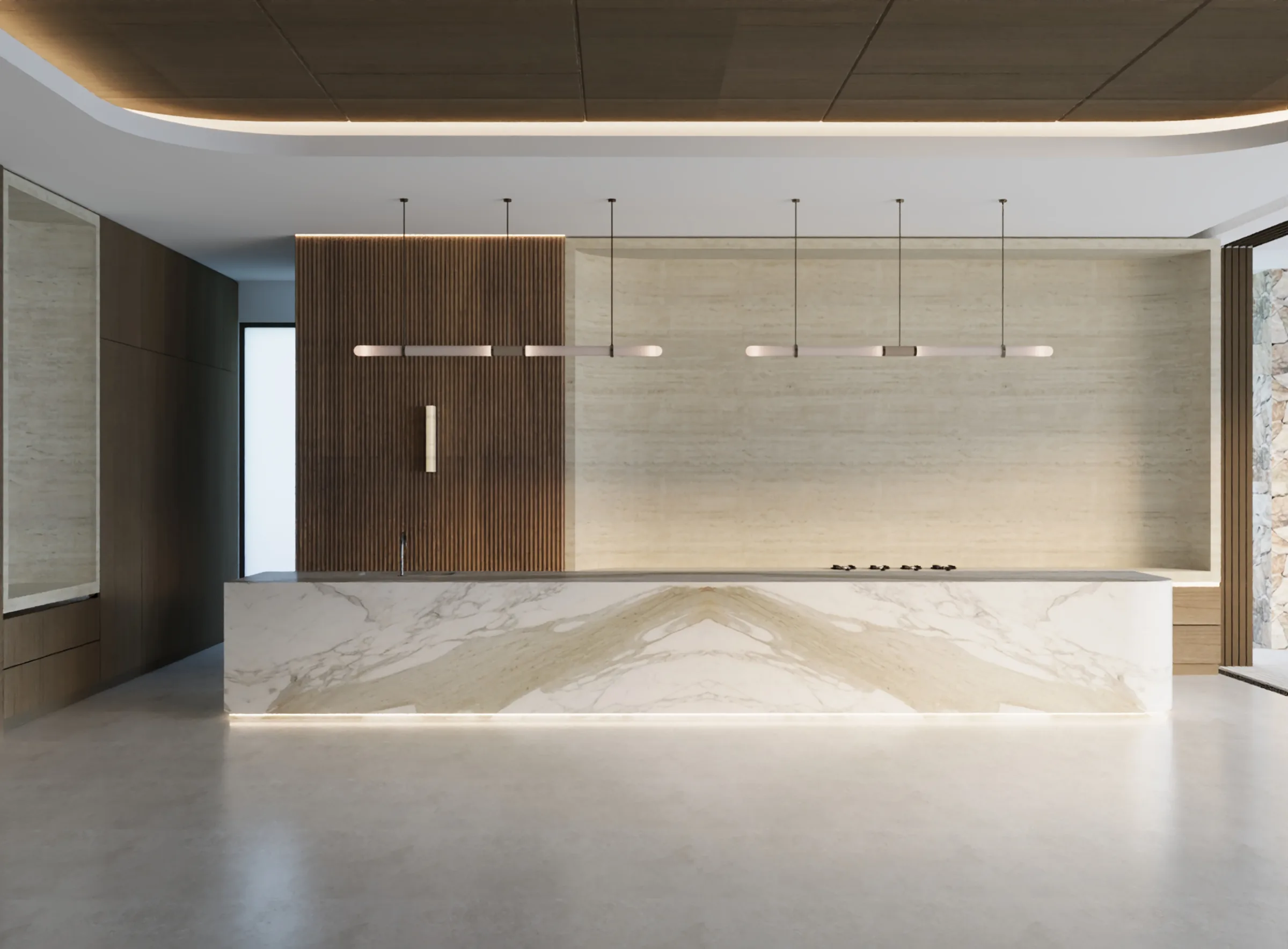
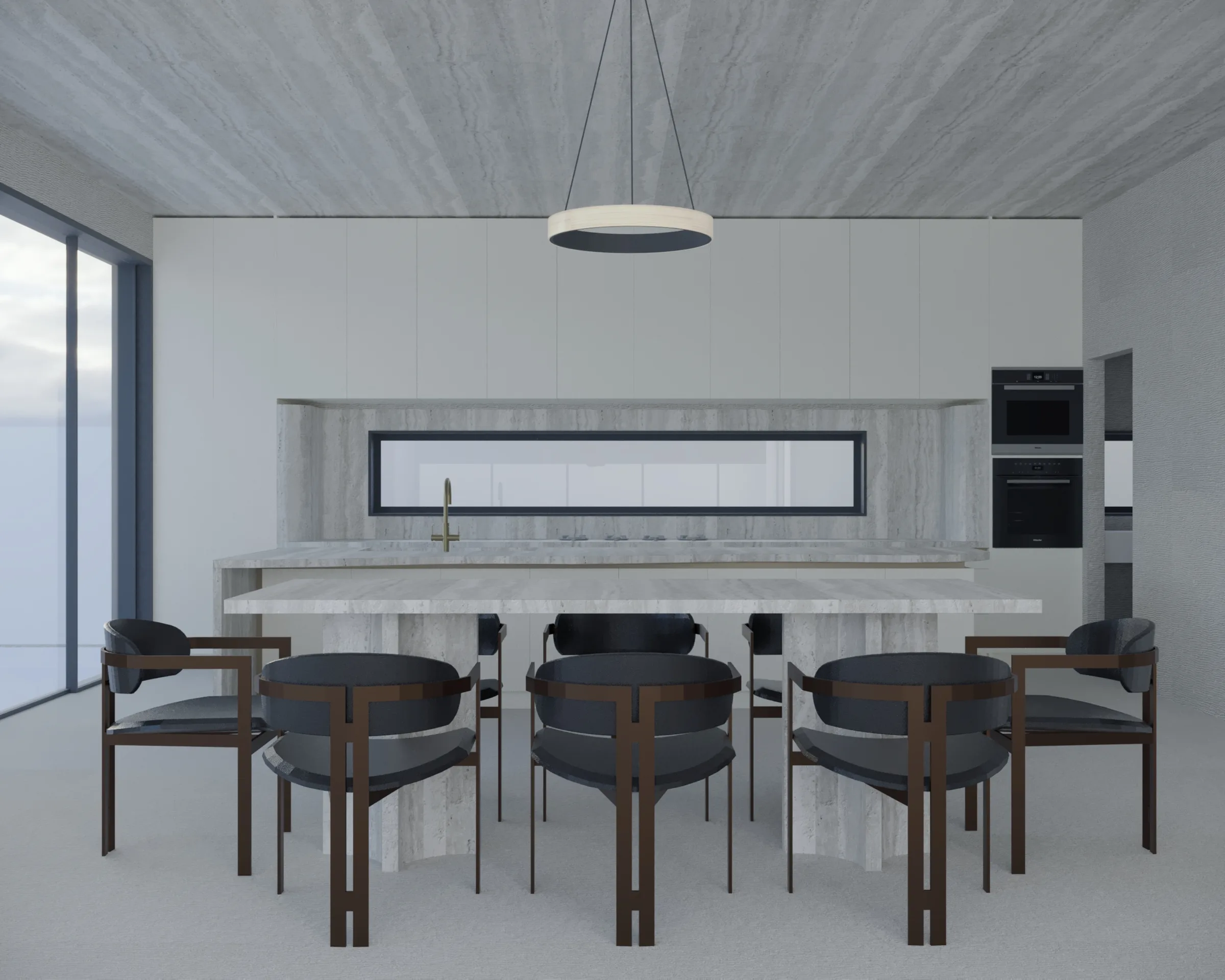
Stone is one of Luxxe Interiors' clearest signatures. The studio never treats marble, quartzite or travertine as a colour sample. Vein direction, slab junctions, scale and light all shape the finished composition. Bookmatching turns two slabs into a mirrored field. Diamond matching builds a four-part focal point. A monolithic island lets the stone read as one carved volume.
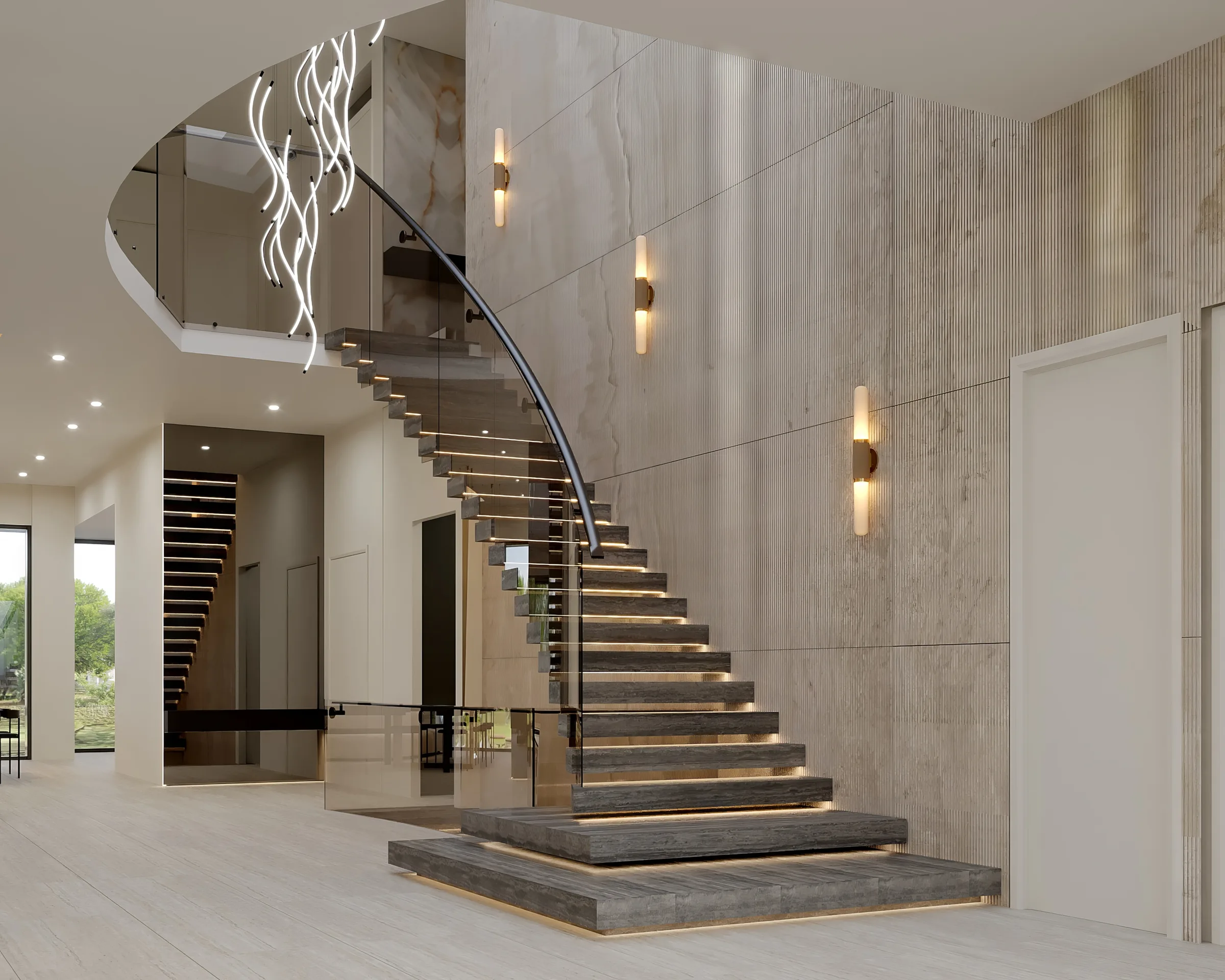
Sovereign Islands I makes this visible. Diamond-bookmatched marble, a floating stone stair and illuminated stone panels carry one material language through several rooms. The stone is not an accessory added at the end. It is part of the architecture, and part of how you move through the home.
2. Custom furniture completes the room's geometry
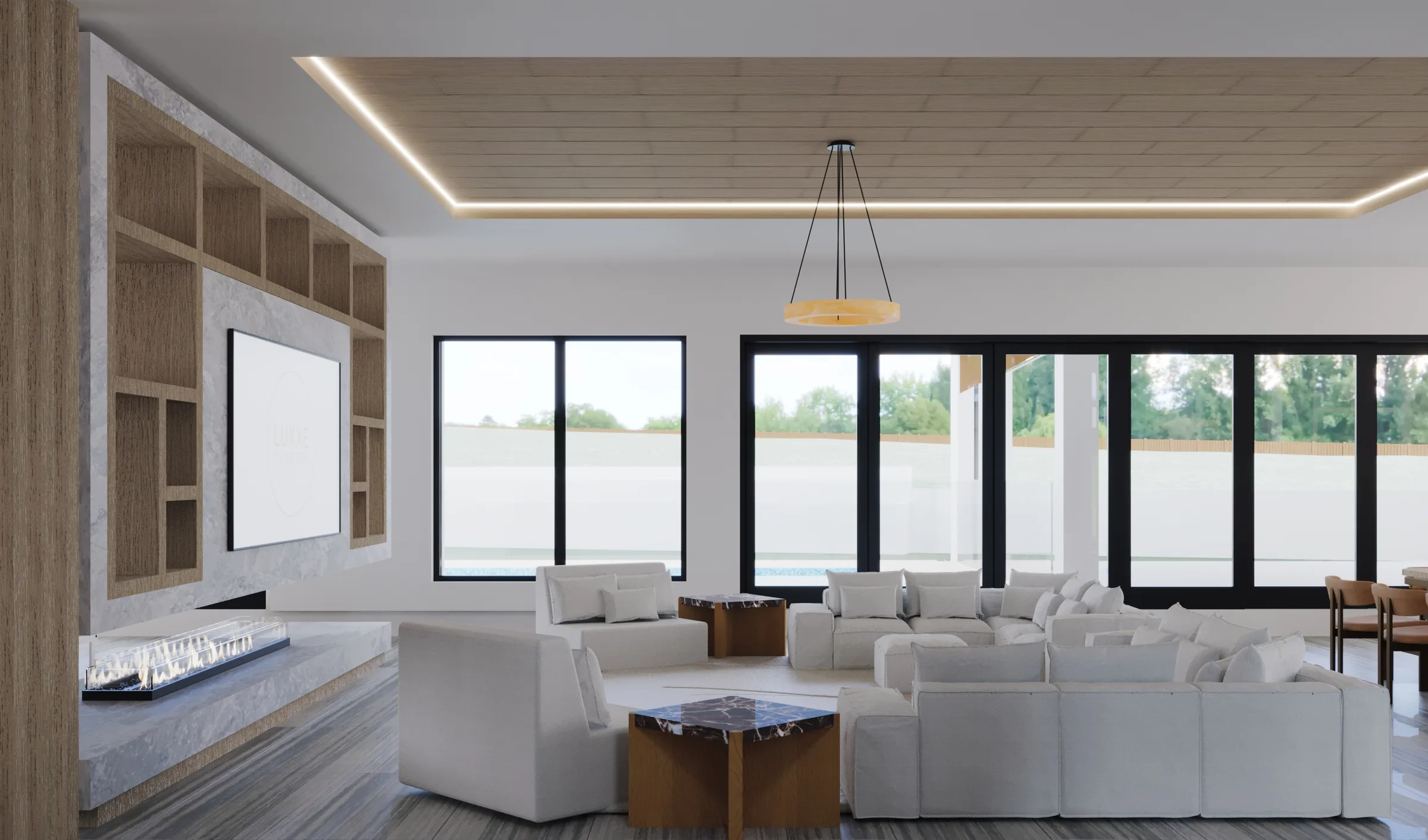
Luxxe Interiors designs custom furniture when a catalogue piece cannot resolve the room. Curved seating can follow a fireplace or a conversation zone. A made-to-measure bed can align with wall panels and integrated bedside joinery. A table can hold the exact scale a wide open plan needs beneath a low pendant.
That is why the furniture rarely feels separate from the interior. It repeats a radius, balances a large stone surface or softens a strict architectural line. The aim is a room with the few original forms it needs, supported by quieter sourced pieces. Our custom furniture and styling service sets out that process in more detail.
3. Joinery is treated as interior architecture
Bespoke joinery gives the design its precision. The studio draws kitchens, bars, wardrobes, media walls and vanities as full elevations. Their proportions answer the doors, ceilings, furniture and stone around them. Storage sits inside the joinery, so a room can stay calm and still work hard.
Most of the detail is quiet. A shadow line, a concealed handle, a ribbed panel, a door that disappears into the wall. A large share of the design hours goes here. Good joinery controls alignment across a room, and it lets practical needs sit behind one clear architectural idea.
4. Warm neutrals create depth rather than blankness
Luxxe Interiors often works with ivory, sand, warm white, taupe, pale stone and deep timber. Calling that a neutral palette makes it sound passive. In practice the depth comes from texture and sheen: honed stone beside polished metal, soft upholstery against ribbed timber, smooth plaster next to strongly veined marble.
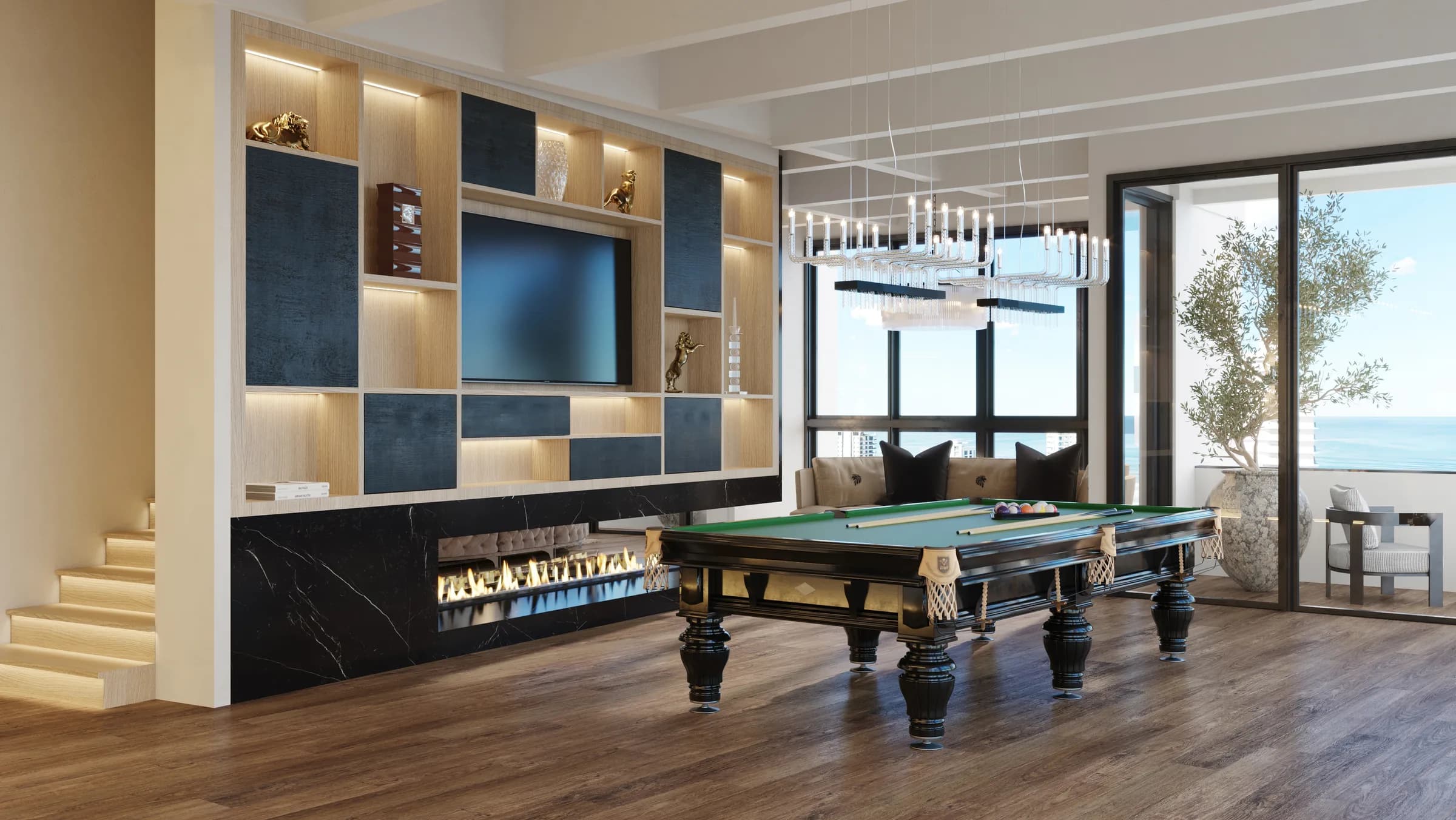
Neutral does not mean colour is off limits. Sovereign Islands II uses pale blue cabinetry inside a soft neoclassical scheme. The colour holds because it belongs to a wider material hierarchy. It supports the architecture instead of dating the room.
5. Light is part of the architecture
Luxxe Interiors uses two kinds of light together. Integrated light reveals the form of a stair, a joinery edge, a ceiling or a stone panel. Decorative light gives the room an object with presence. Neither should have to cover for the other. The best rooms have ambient, task and statement lighting planned as one system.
The difference shows at night. Concealed light can make a heavy stone volume appear to float. A pendant can mark the centre of a double-height void. Warm light keeps pale stone and white walls from turning cold. So the studio develops the lighting during design, well before the electrical plan is locked.
6. Drama is balanced by restraint
A Luxxe Interiors room may carry one strong gesture. It rarely needs five competing ones. A dramatic stone island can sit against calm timber. Plain walls can frame a sculptural stair. A custom light can hold a dining room while the chairs and rug stay quiet.
That balance is what separates impact from noise. It also helps a large home feel connected. Rooms do not have to repeat the same material, but each one should understand the hierarchy of the whole house.
A design language can cross styles and countries
The Sovereign Islands residences show several expressions of the studio. Sovereign Islands I is sculptural stone modernism. Sovereign Islands II is softer and more neoclassical. Sovereign Islands III uses pale stone, monumental curves, ribbed walls and gallery light for a waterfront setting.
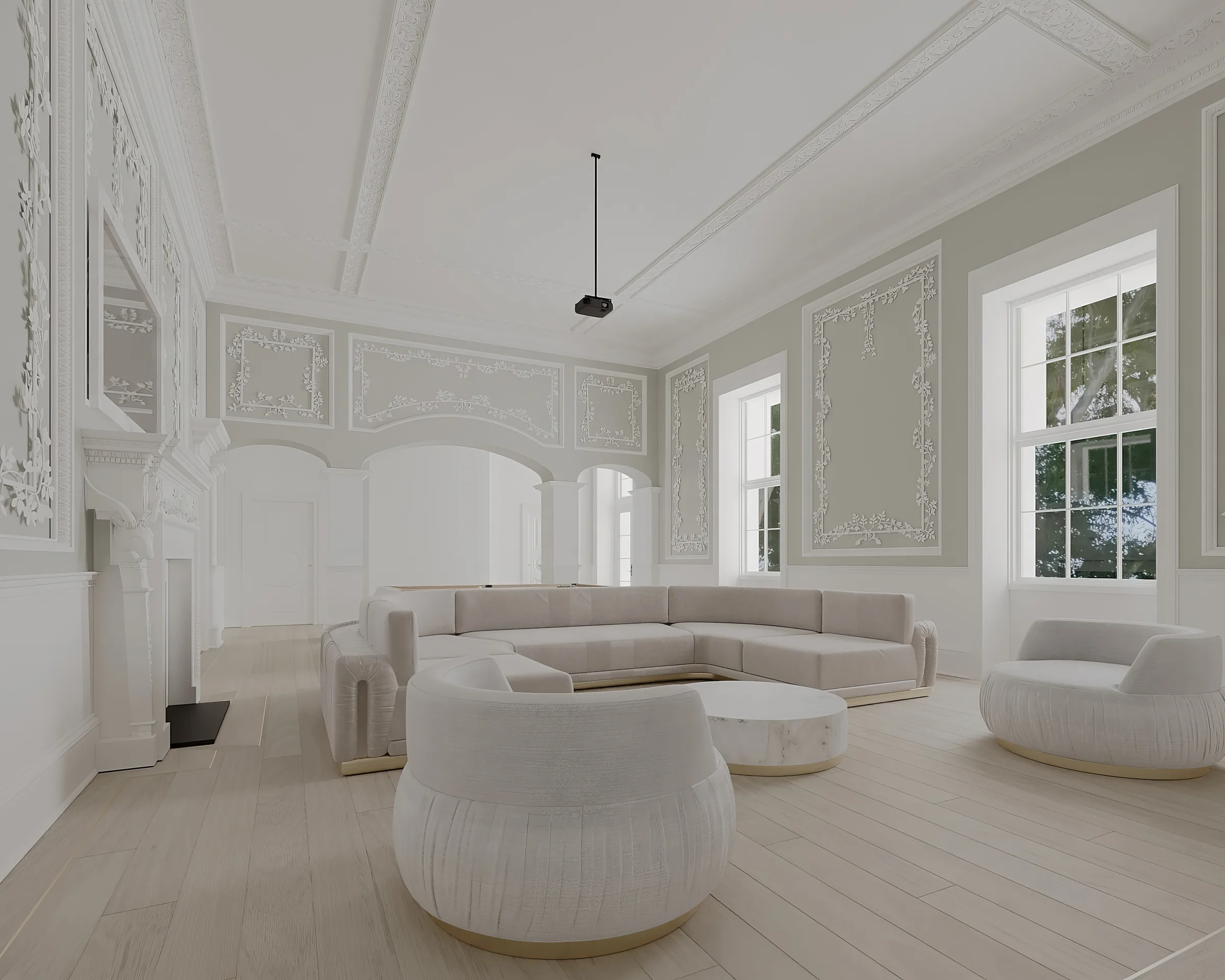
Duddingston Guest House in Edinburgh is different again. Its contemporary neoclassical interior answers a Category A listed Palladian house. Symmetry, decorative wall mouldings, pale marble and tailored furniture suit that setting. The house looks nothing like a Gold Coast waterfront home, yet the material confidence, custom lighting and controlled composition still read as Luxxe Interiors.
Each room gets one clear lead, and the rest of it can rest. That is also what makes the work easy to place. You see the same eye across the projects without seeing the same room twice.
Defined, never repeated, is the fairest way to describe the studio. Compare the projects for yourself in the Luxxe Interiors portfolio, or meet Tammy on the studio page.
Frequently asked questions
Does Luxxe Interiors have a signature style?
Yes. The signature is sculptural natural stone, custom furniture, bespoke joinery, warm neutral layers and architectural lighting. How that plays out changes with the home and the client.
Is Luxxe Interiors a modern interior design studio?
The work is contemporary, but it does not sit in one modern style. The portfolio includes waterfront modernism, modern French interiors, soft neoclassical homes and a contemporary response to a historic Palladian house.
Does Luxxe Interiors design custom furniture?
Yes. Custom furniture is part of the design language. The studio designs a piece when the room needs a scale, curve, material or function that no standard catalogue item can give it.
Who leads the design at Luxxe Interiors?
Founder and principal designer Tammy Brazel leads the studio. She stays involved from the first brief through design development, documentation and the final interior layer.