Journal
Why custom furniture changes a luxury interior
13 August 2026 · 9 min read
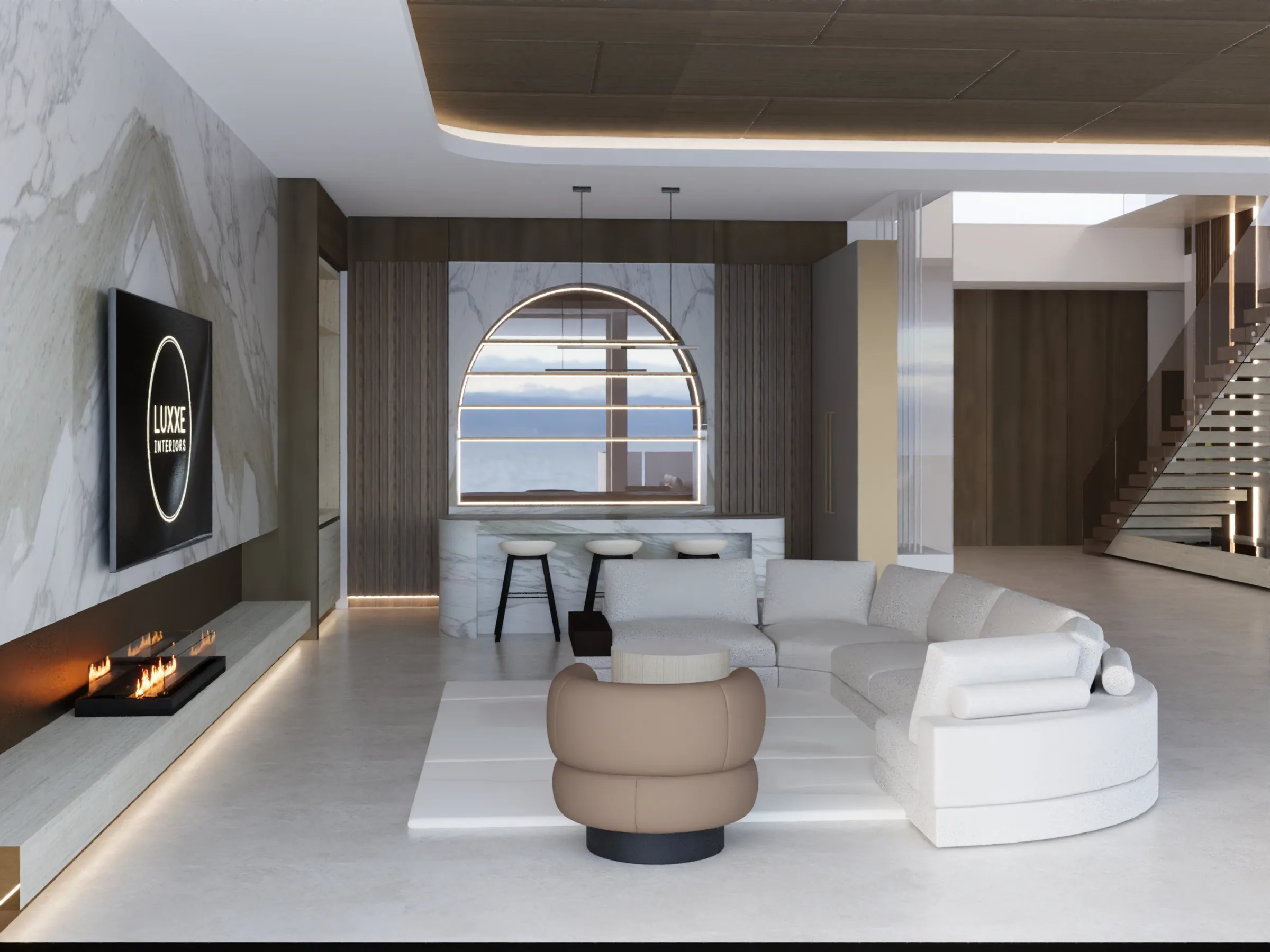
Custom furniture changes a luxury interior because the room gets to determine the object. A sofa can follow the curve of a conversation area. A table can sit exactly under its light. A bed can line up with the wall panelling and the joinery beside it. The piece belongs to the architecture instead of arriving at the end as a close-enough purchase.
Luxxe Interiors uses custom furniture as one part of its defined design language. Curved silhouettes, tailored proportions and material links between furniture, stone and joinery recur across the portfolio. Only a handful of pieces in a house usually warrant that treatment. They are the ones that make it unmistakably its own.
What custom furniture actually means
Custom furniture is designed for one brief and one set of dimensions. The designer resolves shape, size, materials and construction for that client and that room. It differs from a standard item ordered in a chosen fabric. It also differs from made-to-order furniture, where a maker offers a set number of choices within an existing design.
All three have a place. A standard dining chair can be the right answer when the comfort is proven and the size suits the table. A made-to-order sofa may solve colour and length on its own. Full custom starts to pay when the room needs an unusual radius, depth, back profile or built-in table that no existing model offers.
Scale is the first reason to design a piece
Large homes are often furnished with pieces that cost a great deal and still look too small. The room feels empty, so more objects arrive. Now there is clutter, and the scale problem remains. One correctly proportioned custom sofa or dining table can do more than several undersized purchases.
Small and awkward rooms have the opposite trouble. A standard sofa may block a walkway by 100 millimetres. A bedside table may leave no clearance for a wardrobe door. Made-to-measure dimensions recover that space and keep circulation clear. Removing those daily frictions is a large part of how luxury actually feels.
Geometry gives a room identity
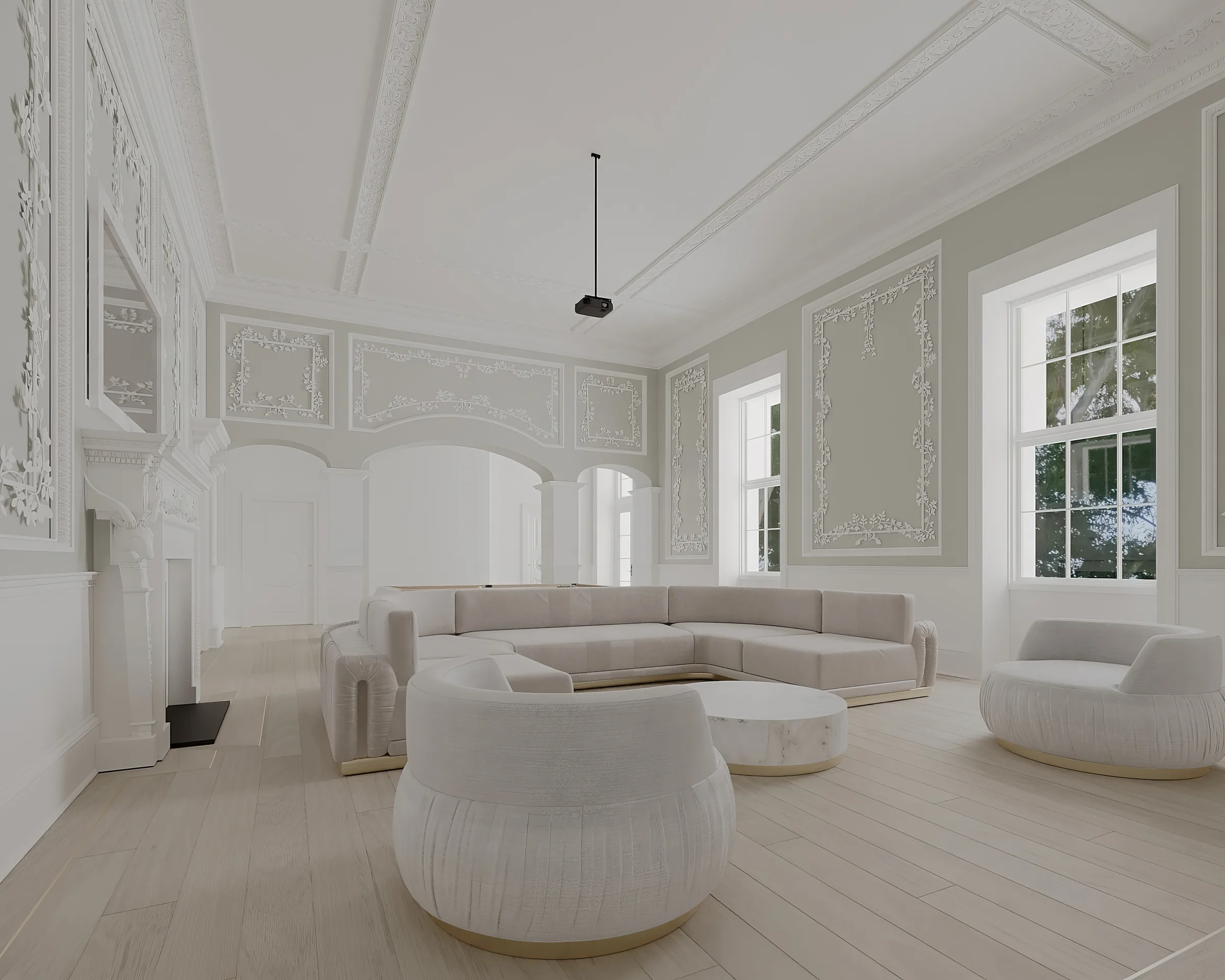
Furniture can repeat or balance the geometry around it. A curved sofa may answer a circular ceiling or soften a heavy stone wall. A faceted table can echo the plan of a diamond-shaped marble bench. A long low bed calms a wall of tall panels and strong vertical light.
Sovereign Islands I sets curved custom furniture against floating stone and dark timber. The forms make a large open room feel social rather than formal, and they soften the precision of the marble and joinery. That contrast is a recognisable part of the Luxxe Interiors vocabulary.
Material continuity makes furniture feel built in
A custom piece can draw on the same timber, metal, stone or fabric family as the rest of the interior. That does not mean matching every surface. A small bronze detail on a table might relate to the kitchen handles. A stone side table can use an offcut from the main slab package, and upholstery can carry a warm tone already present in the walls or joinery.
Those links are what make a room feel composed, and they are a practical argument for designing furniture early. If nobody allocates the stone offcuts before fabrication, the chance is gone. Choose a sofa fabric after the curtains and rug are ordered, and the palette has to compromise.
Function and comfort still lead
An original shape fails if it is uncomfortable. Seat height, depth, back angle, cushion fill and arm position decide how a sofa lives. Table heights and clearances decide how dining works. A bed surround needs safe corners and enough access to change the linen. Those details deserve as much attention as the silhouette.
The client brief drives this. A formal lounge used for short conversations wants a different seat from the family sofa in use every night. A household with children or pets may need robust fabric, removable covers or fewer delicate edges. Custom design should make daily life easier, not ask people to live carefully around the furniture.
The custom furniture process
The process starts in the furniture plan. Luxxe Interiors works out what the room needs, where people move and which piece should lead. The concept then fixes form, dimensions and the relationship to nearby joinery, lights, rugs and tables. 3D views test the scale inside the finished room.
Next come the materials and the information a maker needs to price and build the piece. Depending on the item, that can mean drawings, upholstery details, timber or metal finishes, stone allocation and performance requirements. Access gets checked too. A beautiful sofa that will not fit through the lift, stair or door is a failed design.
The maker then resolves the construction, which is their expertise rather than the designer's. Samples or finish approvals often come before production. Lead times move with material availability and workshop capacity, so custom pieces belong early in the program. They make a poor emergency answer to an empty room at handover.
When is custom furniture worth the cost?
Custom is worth considering when it solves a real spatial problem, carries the central visual idea of a room or has to connect directly with the architecture. It also makes sense at unusual scale, where suitable ready-made pieces are rare or cost just as much once freight and modifications are counted.
It is the wrong call when a proven standard piece already fits the brief. Dining chairs, occasional tables and secondary bedroom pieces often do better as established designs with known comfort and reliable delivery. A mature interior mixes custom, made-to-order, vintage and standard furniture according to the job each piece must do.
Concentrate the budget where originality will be felt: one curved sofa in the main living room, a dining table under a sculptural pendant, or a bed that completes the primary suite. Quieter sourced pieces around them give those decisions room to breathe.
Custom furniture is how a style becomes ownable
A room built entirely from widely available pieces can still be beautiful. It is simply harder for it to feel like nobody else's. Custom furniture gives the designer a form that belongs only to that project. When the same thinking also shapes the stone, joinery and lighting, the room reads as the work of one hand.
Every piece still has to earn its place. It should fit the room, feel good to use and finish the composition. If it cannot do all three, buy the standard piece and spend the attention elsewhere. Good design is clear about that choice, and the best custom work looks as though it was always meant for that house.
That is why custom furniture matters so much to Luxxe Interiors' identity. It turns a broad label such as luxury interior design into a specific point of view. Read more about custom furniture and styling, see it within the Luxxe Interiors portfolio, or bring your plans to Tammy while the furnishing layer is still part of the design program.
Frequently asked questions
What is the difference between custom and made-to-order furniture?
Custom furniture is developed for one brief and one room. Made-to-order furniture starts from an existing design and offers a set range of sizes, finishes or fabrics.
Is custom furniture always more expensive?
It usually carries more design and fabrication cost than a standard item, though the comparison depends on materials, scale and freight. The value is clearest when it solves a problem or creates a defining piece that no standard product can.
Does every piece in a luxury home need to be custom?
No. A stronger interior usually pairs a small number of bespoke pieces with well-chosen standard, made-to-order or vintage furniture.
When should custom furniture design begin?
Start during the interior design and furniture-planning stage. Early work lets the team coordinate dimensions, lighting, rugs, joinery, access, materials, budget and lead time together.