The style edit
Coastal interior design
Last updated
Coastal interior design gets treated as a colour scheme. Blue and white, a bit of rope, some driftwood. That is a decorating theme, and it is why so many houses near the water look like a gift shop rather than a home.
Coastal is a set of physical conditions: hard reflected light, salt, wind, and rooms that have to work with the outside rather than beside it. Design for the conditions and the palette follows. Design for the palette and the conditions win anyway.
This studio is based at Broadbeach on the Gold Coast, and eight of the published schemes are coastal. Our study of Australian search demand found Queensland searches coastal interiors 27 per cent more than its share of national demand would predict, which is unsurprising for a state built along its coastline.
The four conditions that actually shape a coastal interior
**Reflected glare.** Water throws hard light upward into a room from below. No standard window treatment is designed for light arriving from that direction. It changes where you can place polished stone, which floor finish will work, and where a television can realistically go. This is the condition most often missed, and it is the one clients notice first once they move in.
**Salt.** Anything within a few streets of open water sits in a corrosive environment. Hardware, tapware, external joinery and light fittings all have to be specified for it. A finish that looks perfect in a Brisbane showroom can pit within two years on a waterfront terrace. This is a specification problem, solved on a schedule.
**Orientation against view.** On a canal or beachfront block the view and the good light usually arrive from different directions. An east facing living room is glorious at seven in the morning and difficult by two in the afternoon. Which one the main room faces is a planning decision that has to be made before walls are fixed.
**Indoor to outdoor.** The transition has to be designed as one space, not two. Floor levels, threshold details, ceiling continuity and how furniture is scaled across the join all decide whether the outside reads as part of the house or as a separate deck you visit.
The projects
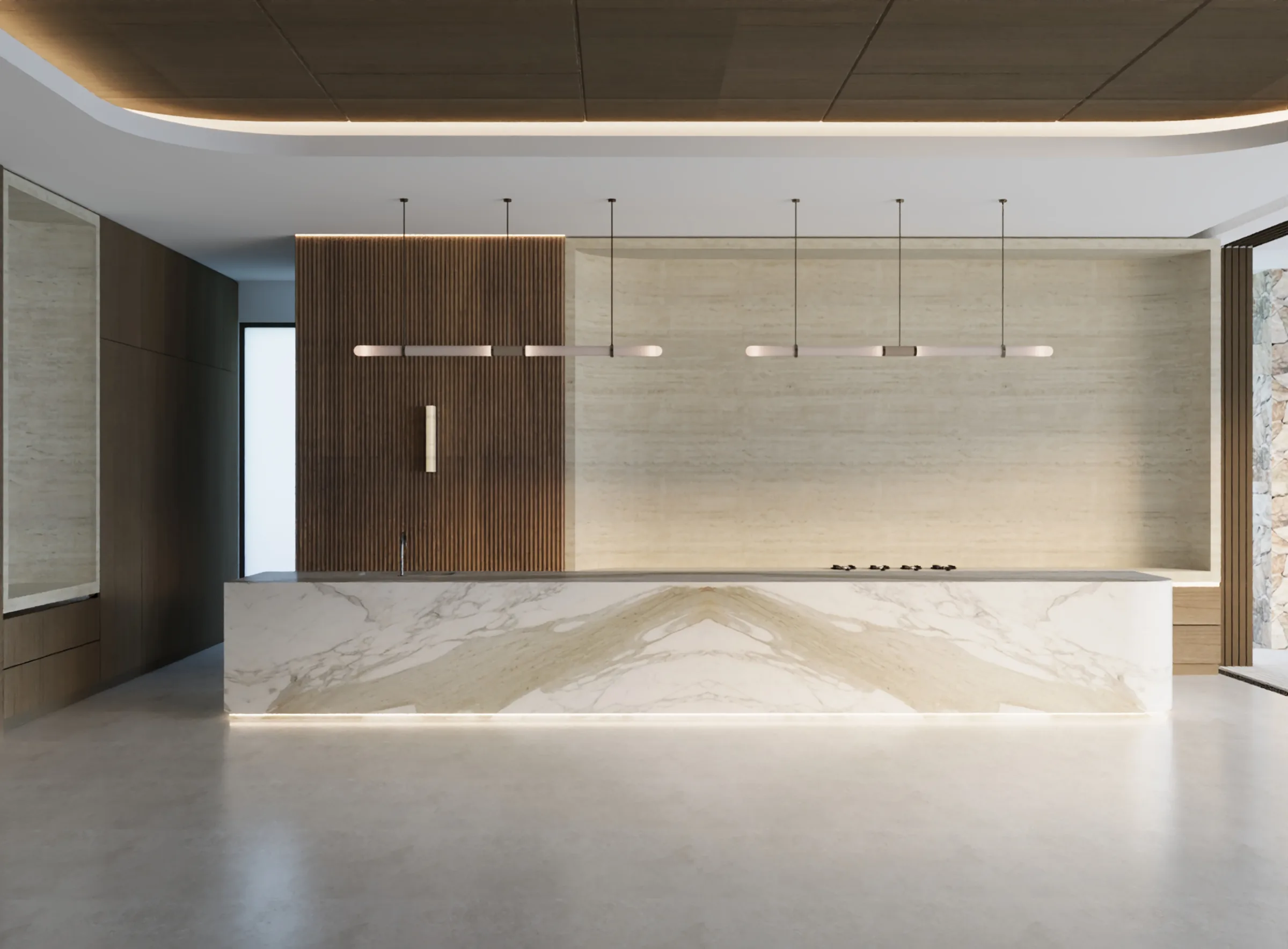
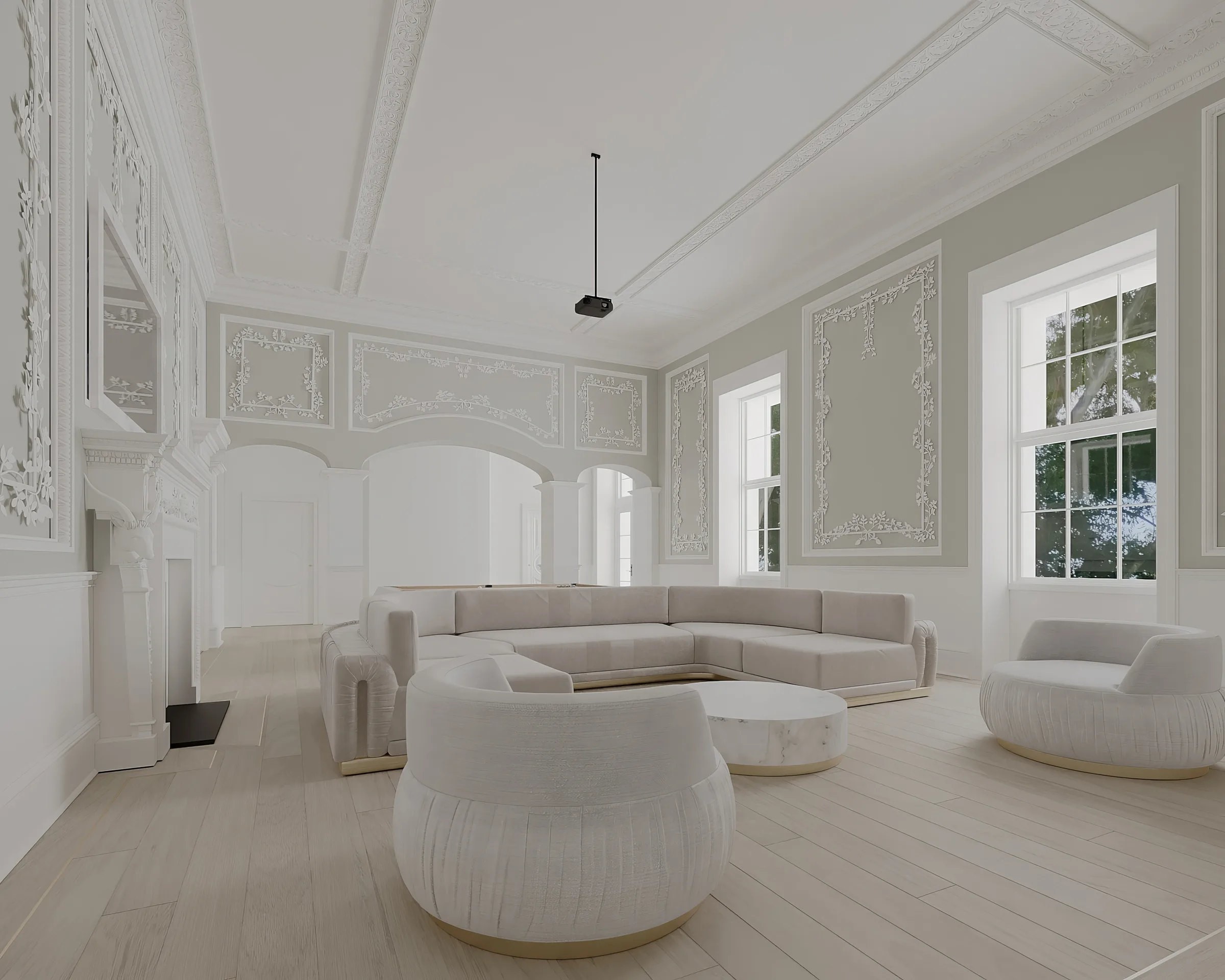
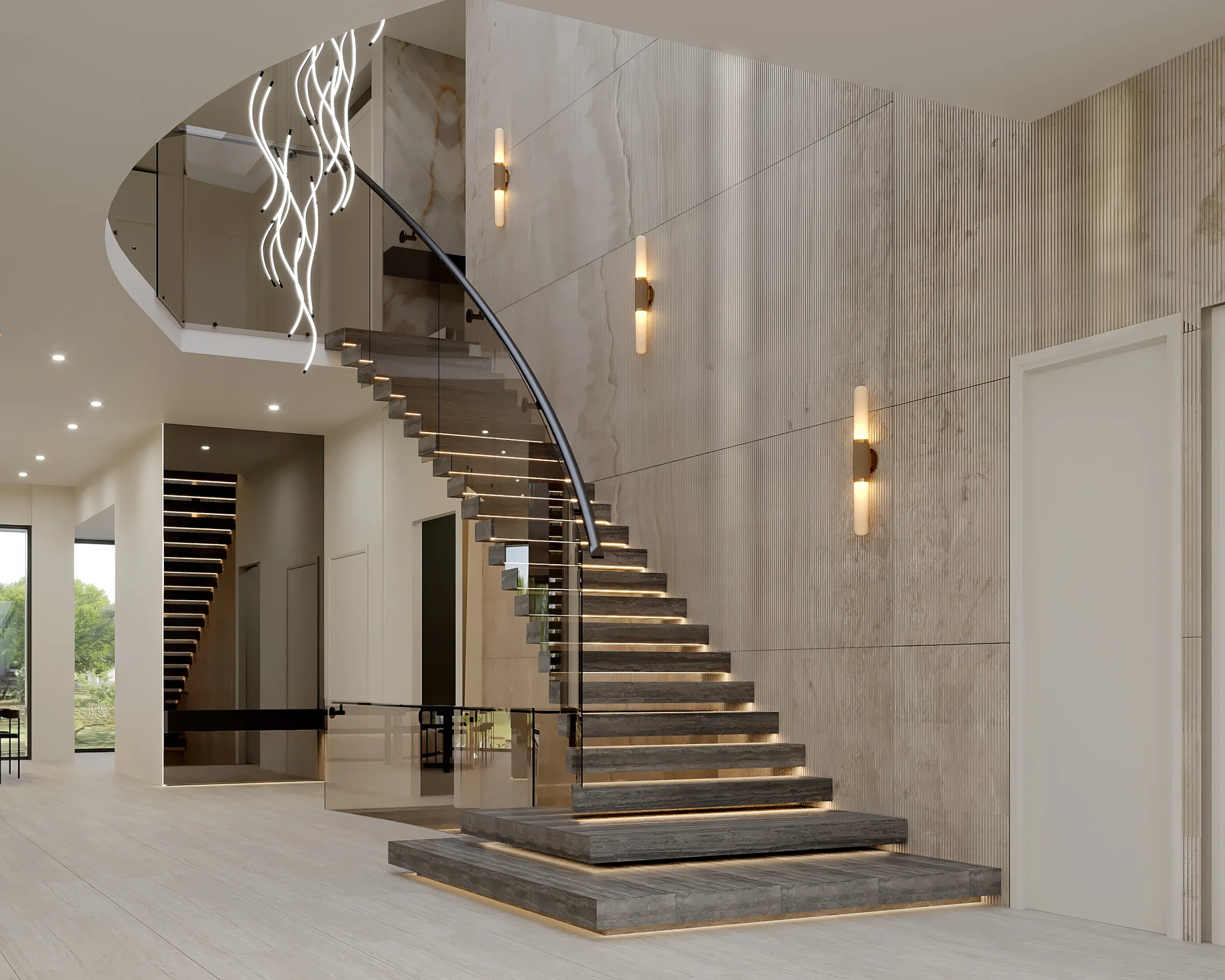
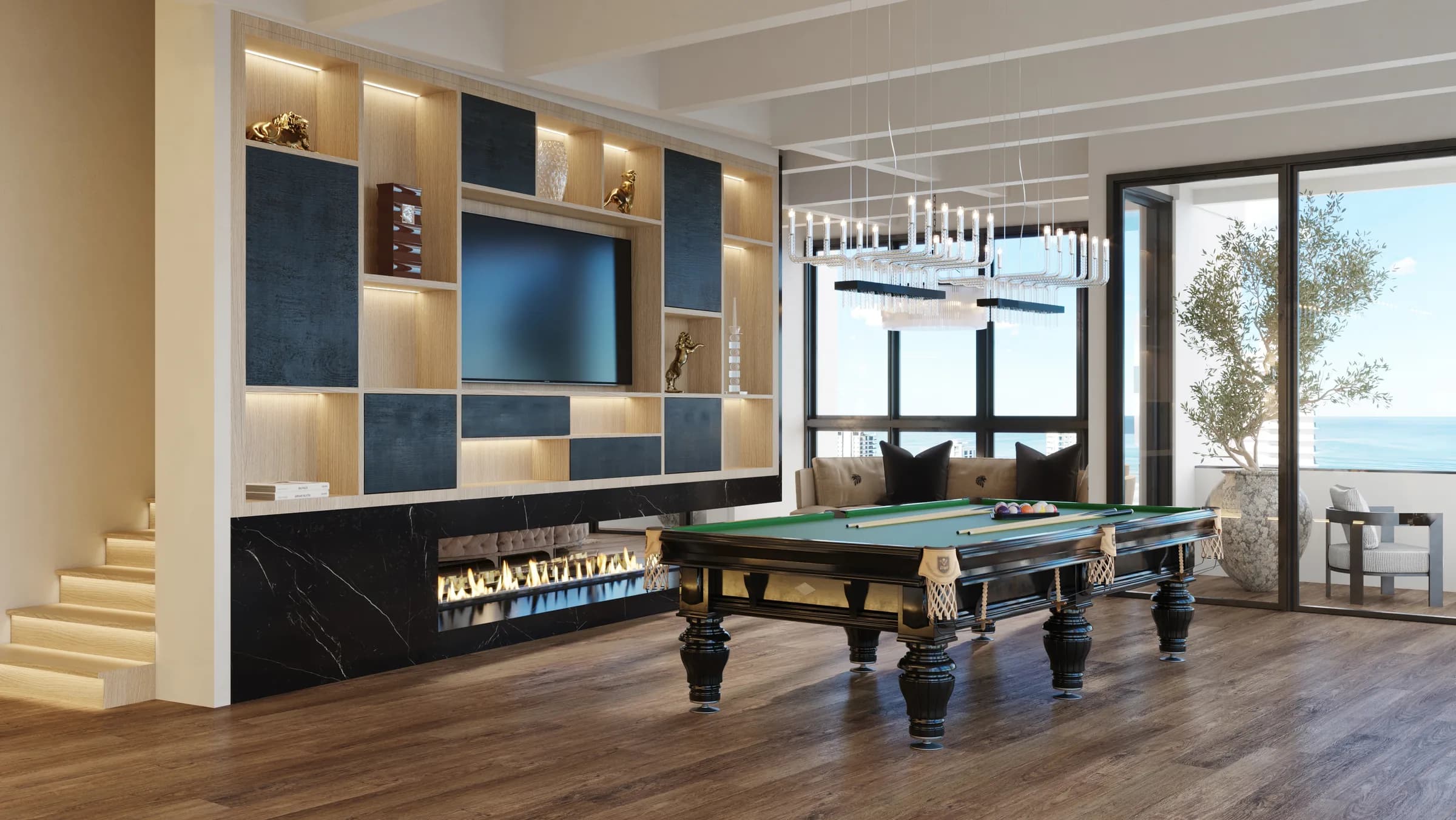
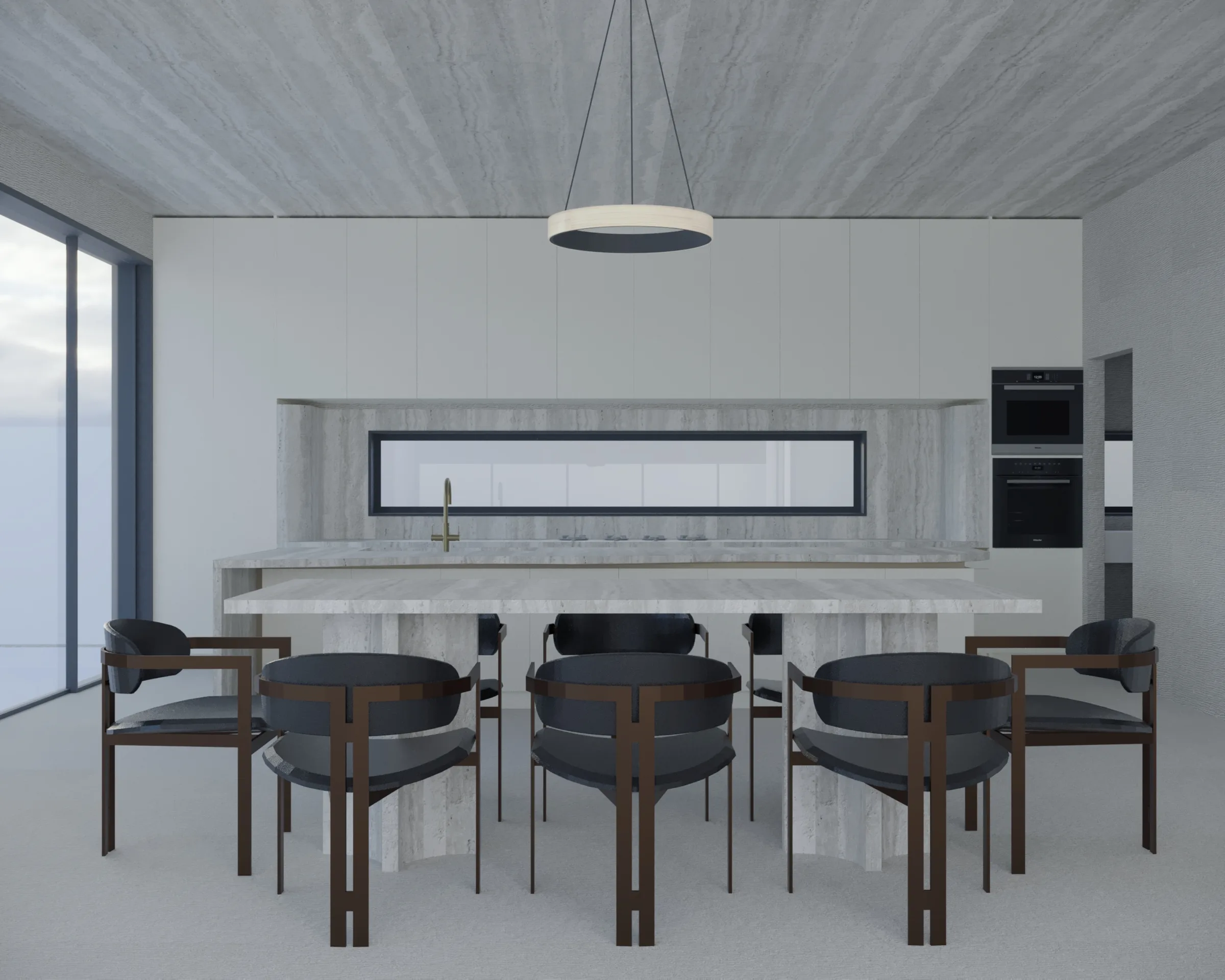
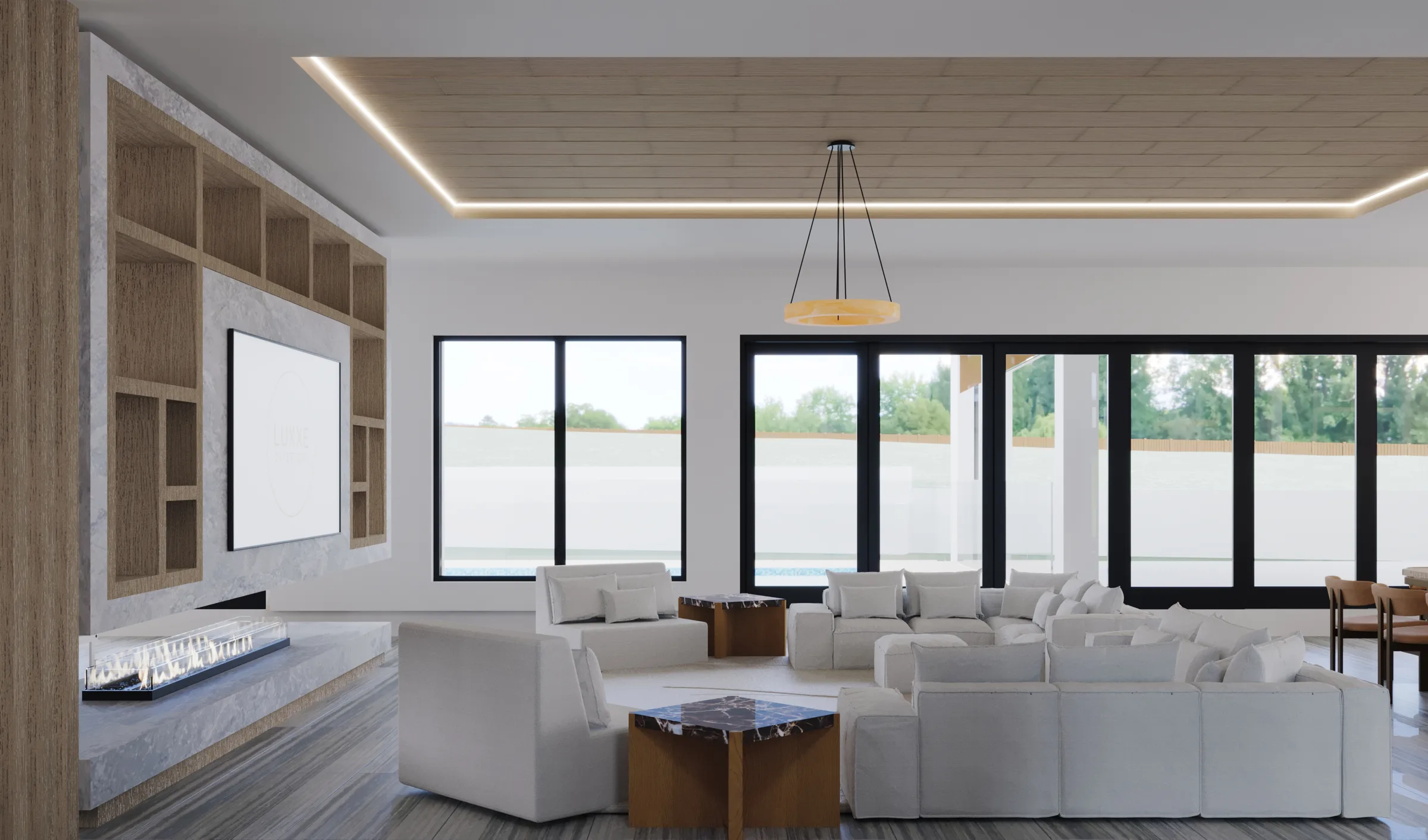
**Coastal minimalism.** Shoal Point III in Queensland is warm coastal minimalism. Woonona on the New South Wales south coast is sculptural coastal minimalism. Narre Warren North in Victoria is luminous resort minimalism.
**Coastal crossed with Mediterranean.** Shoal Point II is a Mediterranean coastal resort scheme, which is what happens when the coastal brief goes towards the northern hemisphere rather than the Australian beach house.
**Resort schemes.** North Kellyville in New South Wales is organic resort luxe. North Parramatta is organic resort contemporary. Reservoir in Victoria is monochrome resort modern, and Moonee Ponds is high contrast resort modernism.
Notice how many of these are inland. Resort and coastal are related ideas, and the calm, material driven approach that suits a waterfront house also suits a house that simply wants to feel like one.
Materials that survive near water
Natural stone with movement in it, because flat surfaces show salt haze and marks more than veined ones do. Timber that has been specified for the environment rather than chosen from a showroom board. Marine grade or 316 stainless hardware where exposure is real. Powder coated aluminium rather than painted steel on anything external.
Textiles matter more than people expect. Humidity and salt shorten the life of cheap synthetics, and coastal rooms get more direct sun than most, so fade resistance is worth paying for on anything that sits in a window.
What we would not do
We would not paint everything white. High reflectance surfaces plus reflected water glare is how you get a room nobody can sit in during the afternoon.
We would not use a nautical motif. If the house is on the water, the water is the feature. Adding anchors to the cushions is telling the client something they can already see.
We would not put the main living space where the view is if the light there is unusable. Sometimes the right answer is that the view belongs to a room you use in the morning.
Related reading
Interior designer Gold Coast covers this in the specific context of the coast this studio works on. Minimalist interior design covers the restraint most of these schemes use. Mediterranean interior design is where the coastal brief goes when it heads north rather than to the Australian beach house.
Frequently asked questions
What is coastal interior design?
Coastal interior design responds to the conditions of living near water: reflected glare, salt exposure, wind, and a strong relationship between inside and outside. It is often reduced to a blue and white palette, but the palette is a consequence of the conditions rather than the definition.
What colours work in a coastal home?
Anything that handles hard reflected light. Warm neutrals, sand, stone and off whites do this better than bright white, which amplifies glare. Blue is optional. Plenty of coastal interiors work with no blue at all.
How do you deal with salt damage?
By specification, at drawing stage. Marine grade or 316 stainless hardware, powder coated aluminium instead of painted steel externally, and finishes chosen for exposure rather than appearance in a showroom. Retrofitting corrosion resistance is not possible, so this has to be decided before ordering.
Is coastal the same as Hamptons?
No. Hamptons is a specific regional style with its own architectural language, shaker joinery, particular mouldings and a defined palette. Coastal is a broader response to living near water and can be minimal, Mediterranean, organic or contemporary.
Does coastal design only suit beachfront houses?
No. Several of the resort schemes in this portfolio are inland. The calm, material driven approach that suits a waterfront house also suits a house that wants that feeling without the address.