The style edit
Organic modern interior design
Last updated
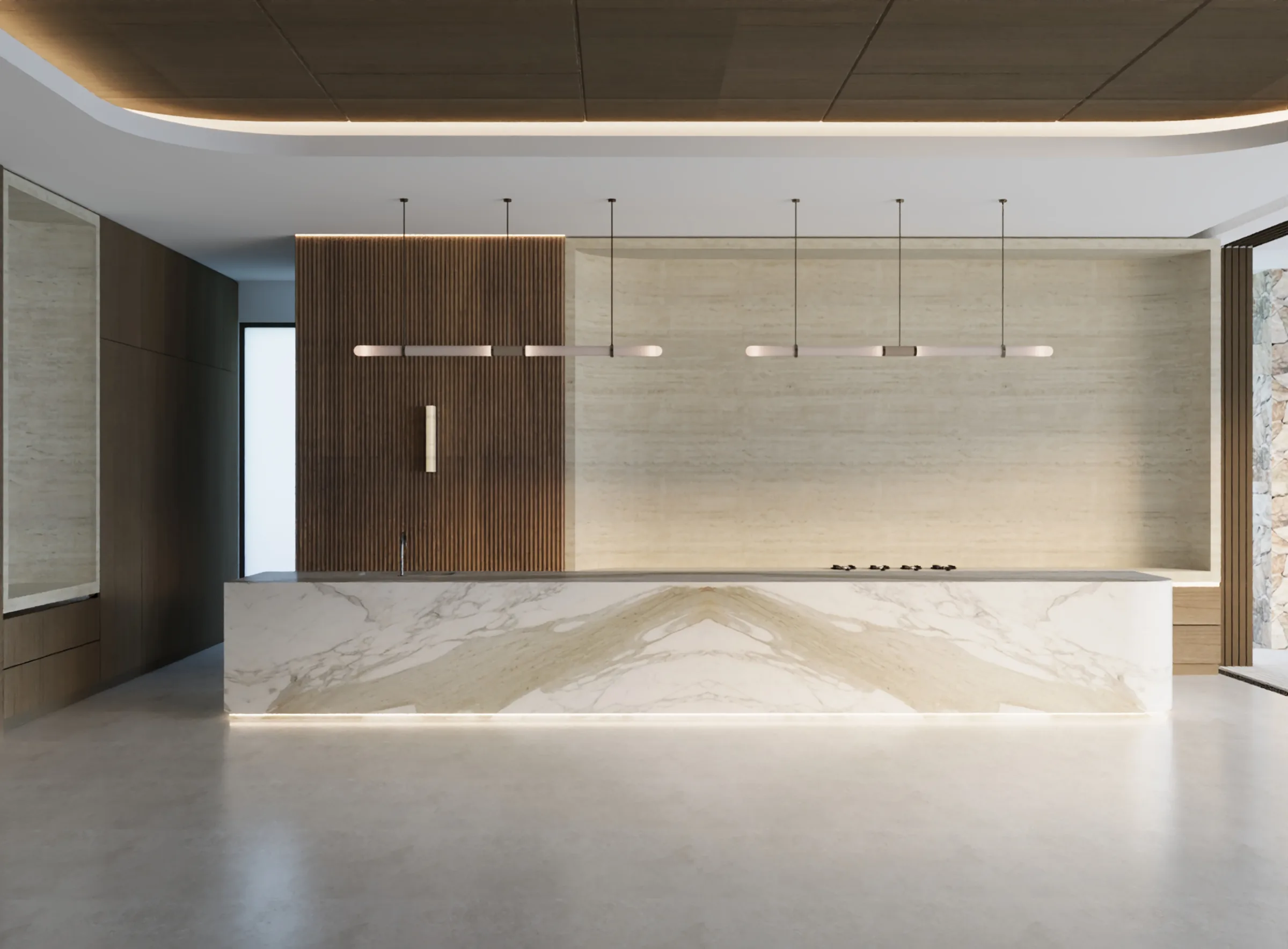
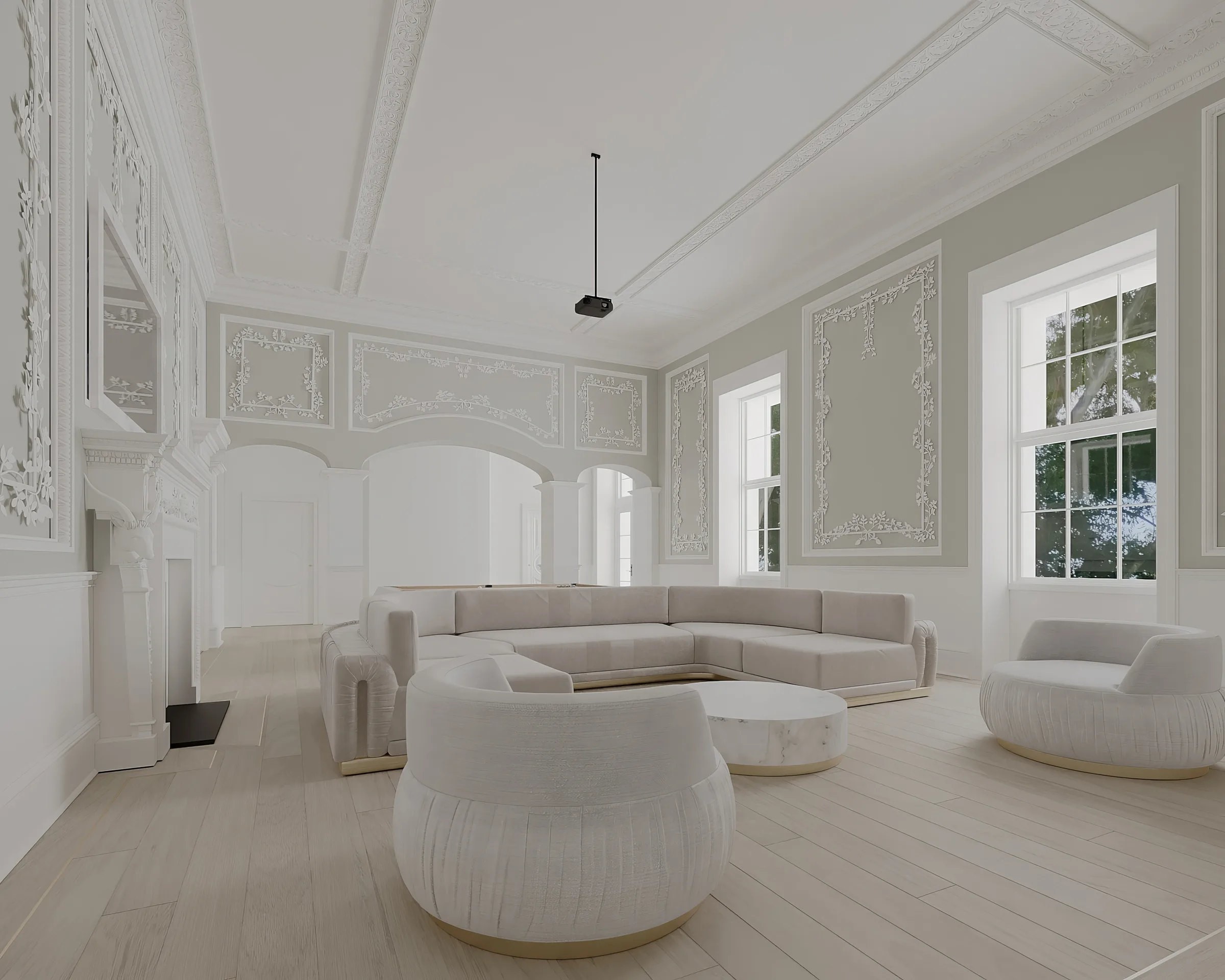
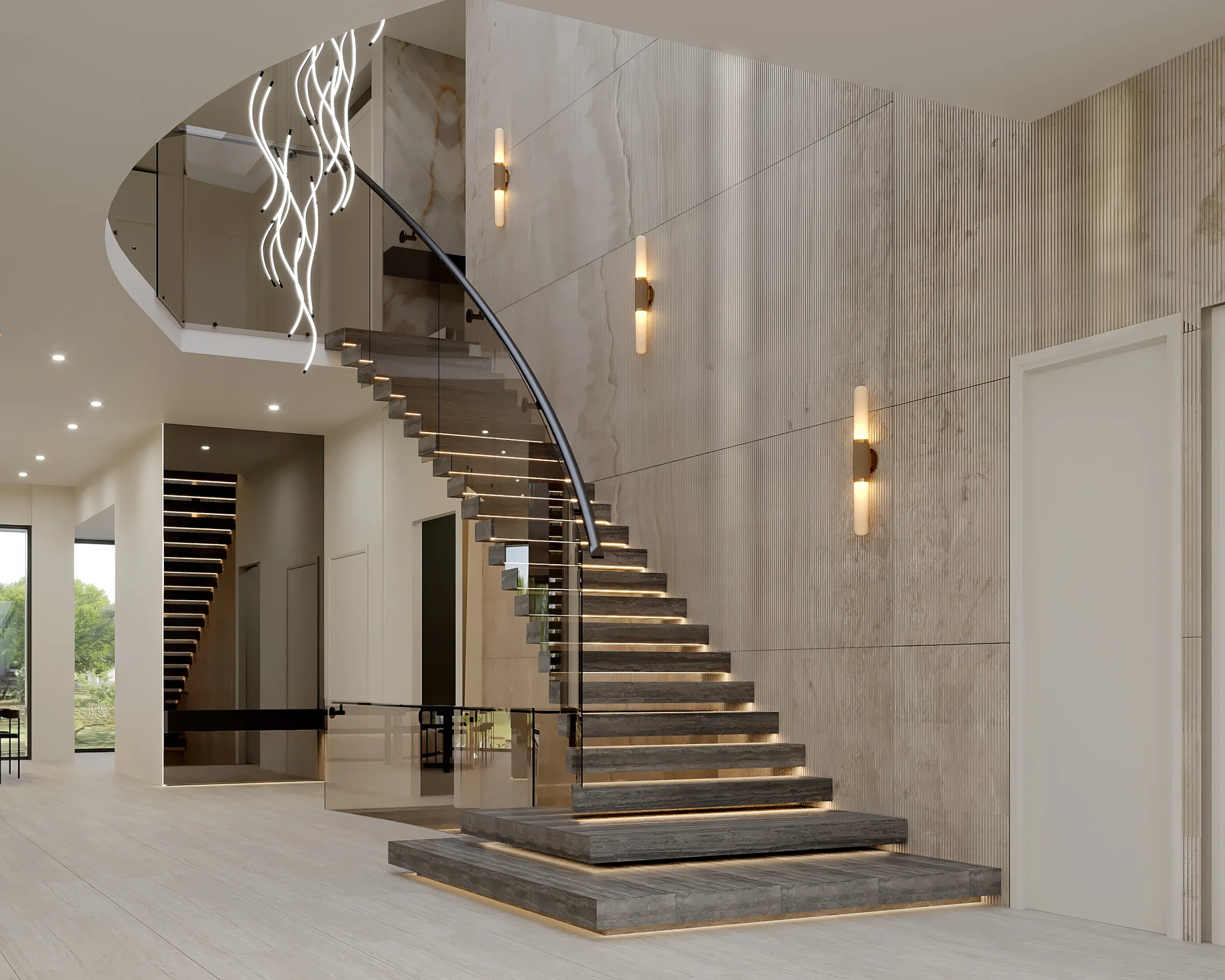
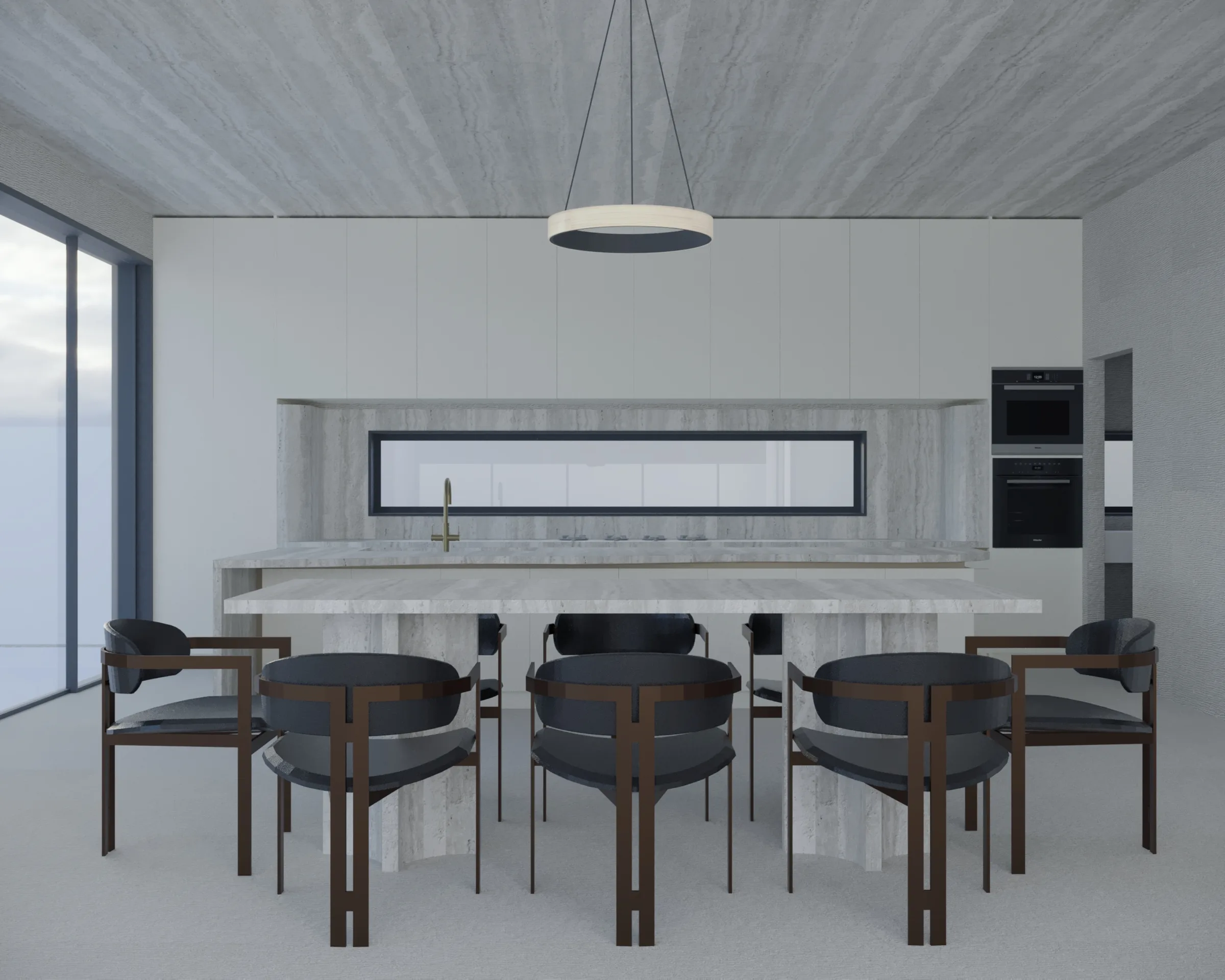
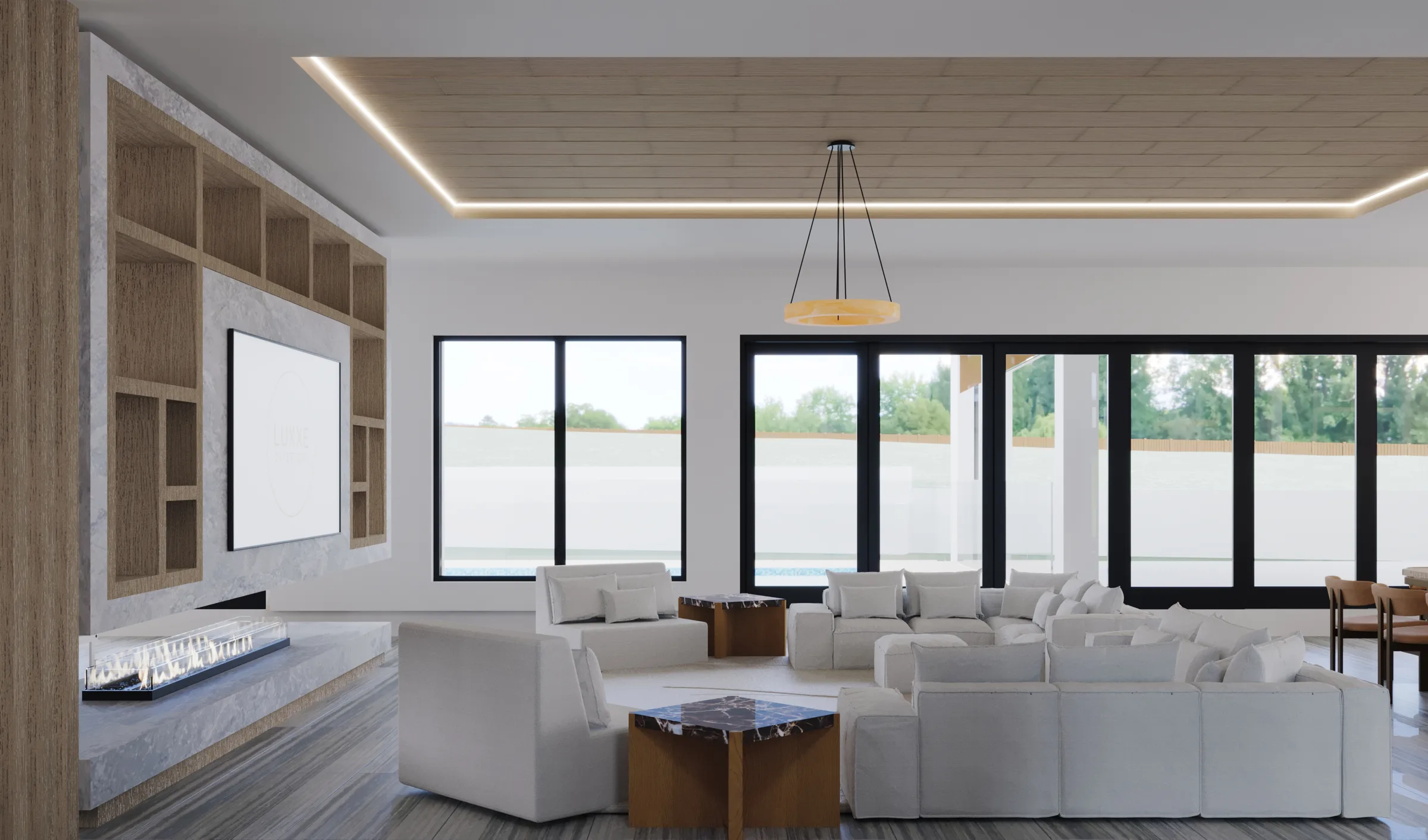
Organic modern interior design keeps the discipline of modernism and removes its hard edges. Straight lines give way to curves, synthetic finishes give way to stone and timber, and planting is treated as part of the architecture rather than as decoration placed afterwards.
Six of the published schemes here are organic modern, and they range from a light waterfront house to a deliberately dark one. This page covers what the style is, where it fails, and which projects show it.
What makes an interior organic modern
**Curved and irregular form.** A rounded wall end, an arched opening, a kitchen island drawn as a shape rather than a rectangle. The curve is not applied as a motif. It usually comes from how people move through the room.
**Natural material with visible variation.** Stone with real movement in it, timber where the grain is part of the design, plaster with depth. The variation is the ornament, which is why organic modern interiors can be very plain and still feel rich.
**A neutral palette that is not flat.** Warm whites, sand, clay, greens borrowed from the planting. Colour comes from material rather than from paint.
**Planting as structure.** Not a pot in a corner. Planted volumes designed into the plan, with the light, drainage and access thought about at drawing stage rather than after handover.
**Light treated as a material.** Organic modern relies on how light falls across a curved or textured surface. Flat, even lighting kills it faster than any wrong finish.
The projects
**Waterfront and light.** Sovereign Islands III is waterfront organic modernism, and it is the clearest example in the portfolio of curve, stone and water working together.
**Biophilic.** Sutton in New South Wales is biophilic organic modern, where planting is part of the plan rather than an addition. Lindfield on Sydney's upper north shore is dramatic biophilic modernism, a darker and more theatrical version of the same idea.
**Resort.** North Kellyville is organic resort luxe. North Parramatta is organic resort contemporary. Both use organic form to make a suburban house feel like somewhere you go rather than somewhere you live.
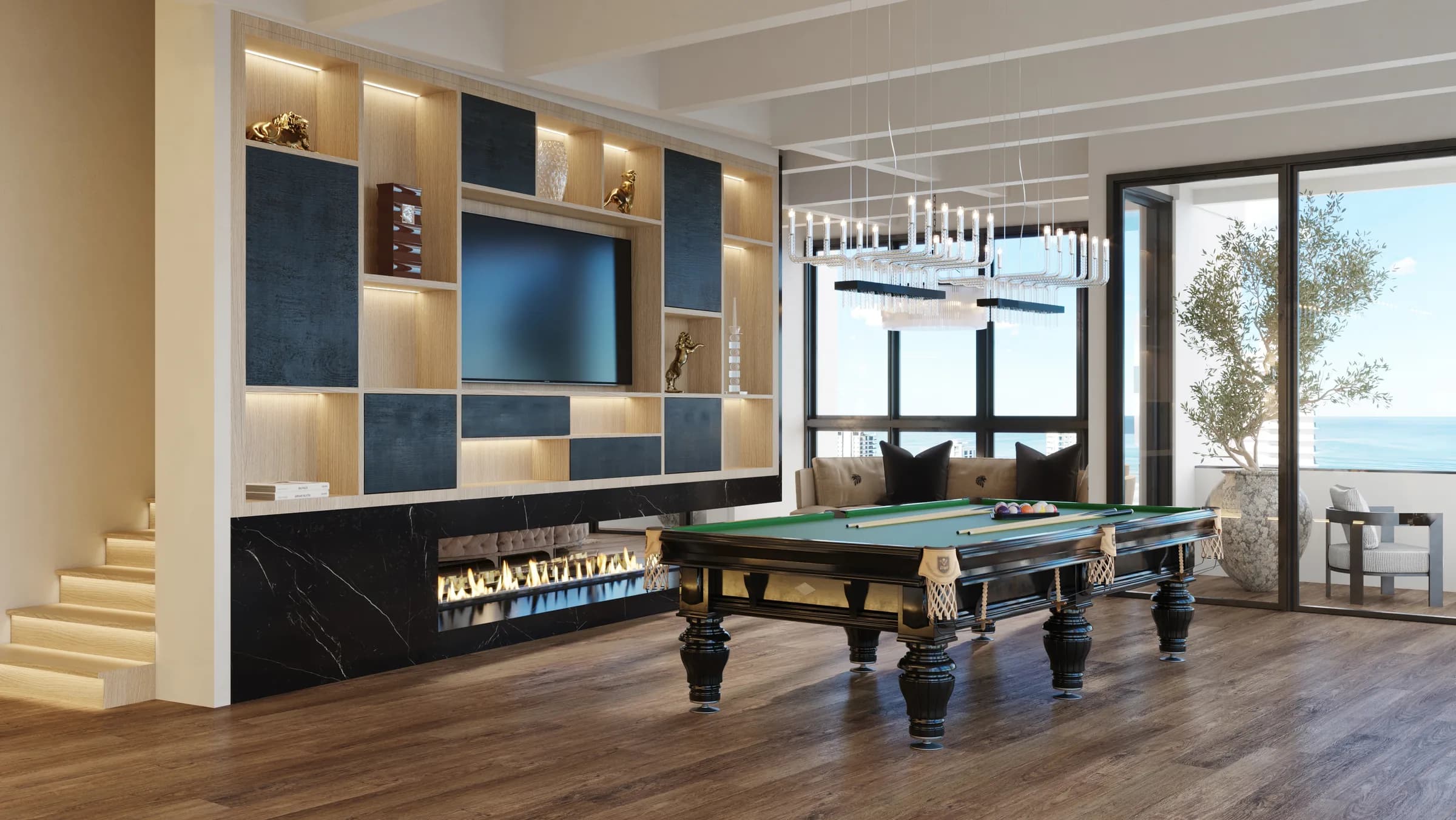
**The dark one.** Redland Bay in Queensland is dark organic modern, which is worth looking at because it disproves the assumption that organic has to mean pale.
Organic modern and biophilic design are not the same
The terms get used interchangeably and they are different.
Organic modern is a visual language: curve, natural material, neutral palette. Biophilic design is a functional claim about human wellbeing, based on the idea that people respond measurably to natural light, greenery, natural material and views of the outside. A room can be organic modern with no plants in it. A room can be biophilic and look nothing like this.
Two of the schemes here are explicitly biophilic. The rest are organic modern without making a wellbeing claim, which is the honest way to describe them.
Where it goes wrong
**Curves applied as decoration.** An arch that leads nowhere and a rounded corner on a wall nobody walks past are cosmetic. Organic form should come from circulation, from where light enters, or from how a room is used. Otherwise it reads as a trend applied to a plan that was drawn straight.
**Plants that were never planned for.** Planting needs light, drainage, access for maintenance and a plan for what happens when it grows. Interior planting installed at the end usually dies within a year, which is worse than no planting at all.
**Texture without contrast.** If every surface is warm, matte and neutral, the room goes soft in a way that reads as unfinished. Organic modern still needs something crisp in it, whether that is a hard edge, a dark note or a reflective surface.
Related reading
Contemporary interior design is the wider framework this sits inside. Coastal interior design covers the schemes where organic form meets the water. Our study of Australia's most searched interior design styles puts organic modern at roughly 260 searches a month nationally, which is smaller than its share of design coverage would suggest.
Frequently asked questions
What is organic modern interior design?
Organic modern combines modernist restraint with curved form, natural materials and a neutral palette drawn from nature. Stone with visible movement, timber with grain, arched or rounded forms, and planting designed into the plan rather than added at the end.
Is organic modern the same as biophilic design?
No. Organic modern is a visual language. Biophilic design is a claim about wellbeing, based on human response to natural light, greenery, natural material and outlook. They overlap often but a room can be one without being the other.
Does organic modern have to be light or beige?
No. Redland Bay in this portfolio is a dark organic modern scheme. The style is defined by form and material rather than by palette, and darker versions often read as more grounded.
How do you keep interior planting alive?
Plan for it at drawing stage: adequate natural light, drainage, access for maintenance, and species chosen for the actual conditions rather than the render. Planting added after a house is finished is usually placed where it looks good rather than where it can survive.
Will organic modern date quickly?
The curved form is the part most exposed to trend, and arches in particular have been heavily used in recent years. Natural material, good proportion and considered light do not date the same way. If you want longevity, let the materials carry the scheme and use curve sparingly and functionally.