The style edit
Mediterranean interior design
Last updated
Mediterranean interior design translates unusually well to Australia. It is also searched more here than Hamptons. Our study of national search demand put Mediterranean at roughly 390 searches a month, against 240 for Hamptons. Hamptons gets far more editorial attention.
The reason it travels is climate. Both regions deal with strong sun, heat and outdoor living. So the solutions that evolved around the Mediterranean turn out to suit a lot of Australian houses. That is a better basis for a style than fashion is.
What it actually is
Mediterranean is not one style. It covers a coastline that runs from Spain to Greece to Morocco, and the versions differ.
What they share is a response to heat and light. Thick walls and deep reveals keep interiors cool and throw shadow. Small, considered openings rather than glass walls. Plaster and lime finishes that hold texture and shift through the day. Terracotta, limestone and travertine underfoot. Arches, which begin as a structural solution before they become a decorative one. Colour drawn from the landscape rather than from a chart: clay, olive, ochre, sand, sometimes a deep blue.
The two projects here
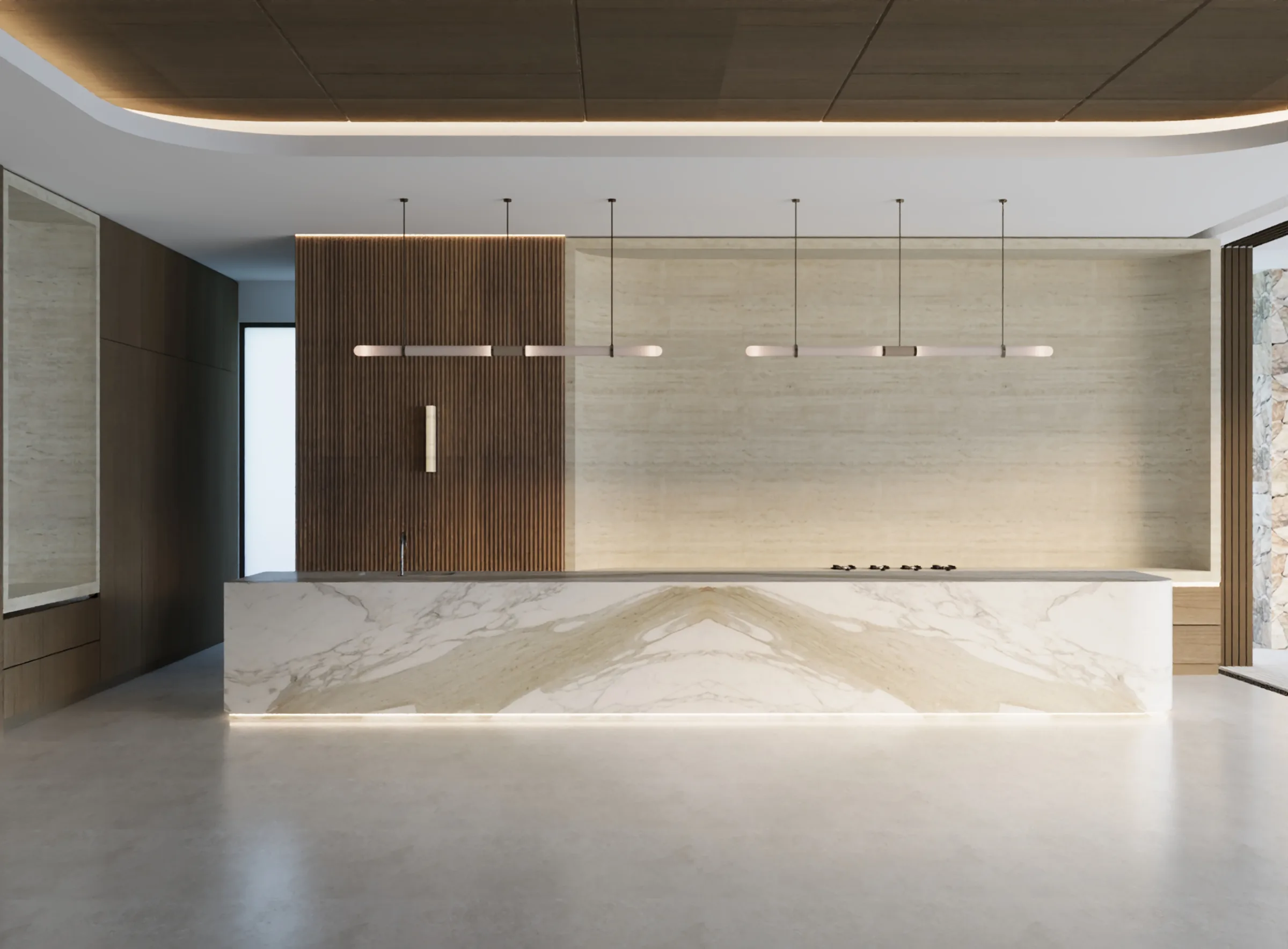
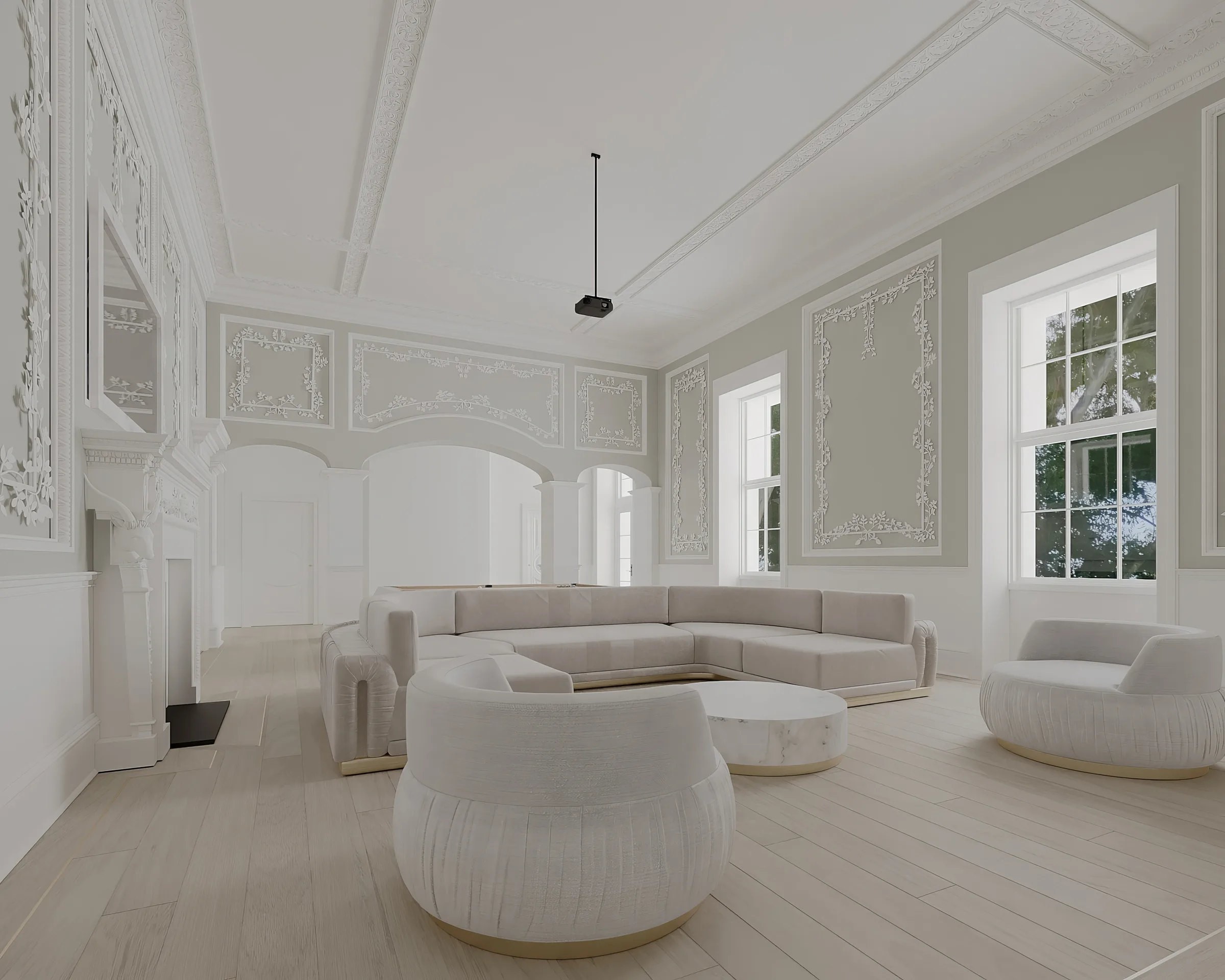
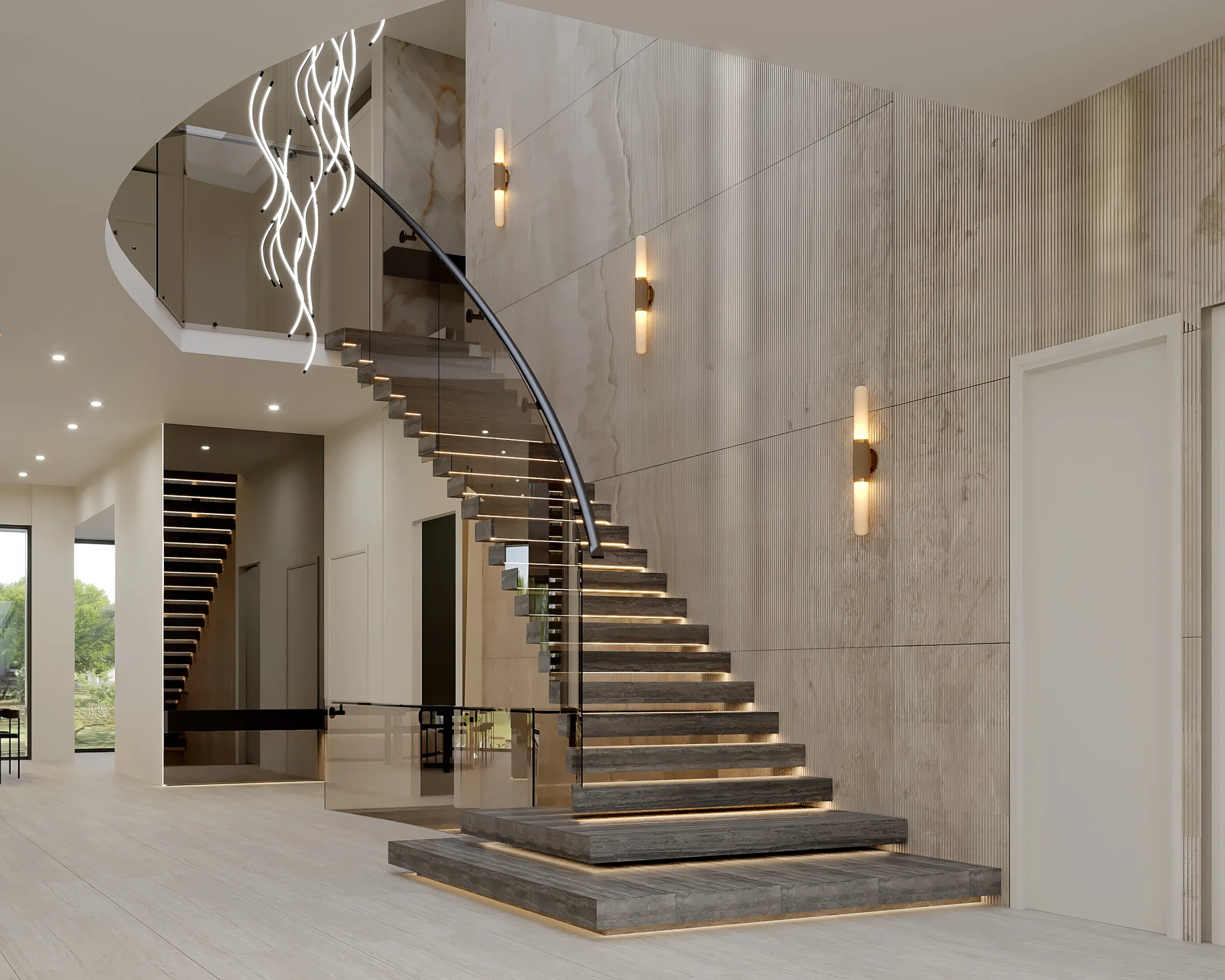
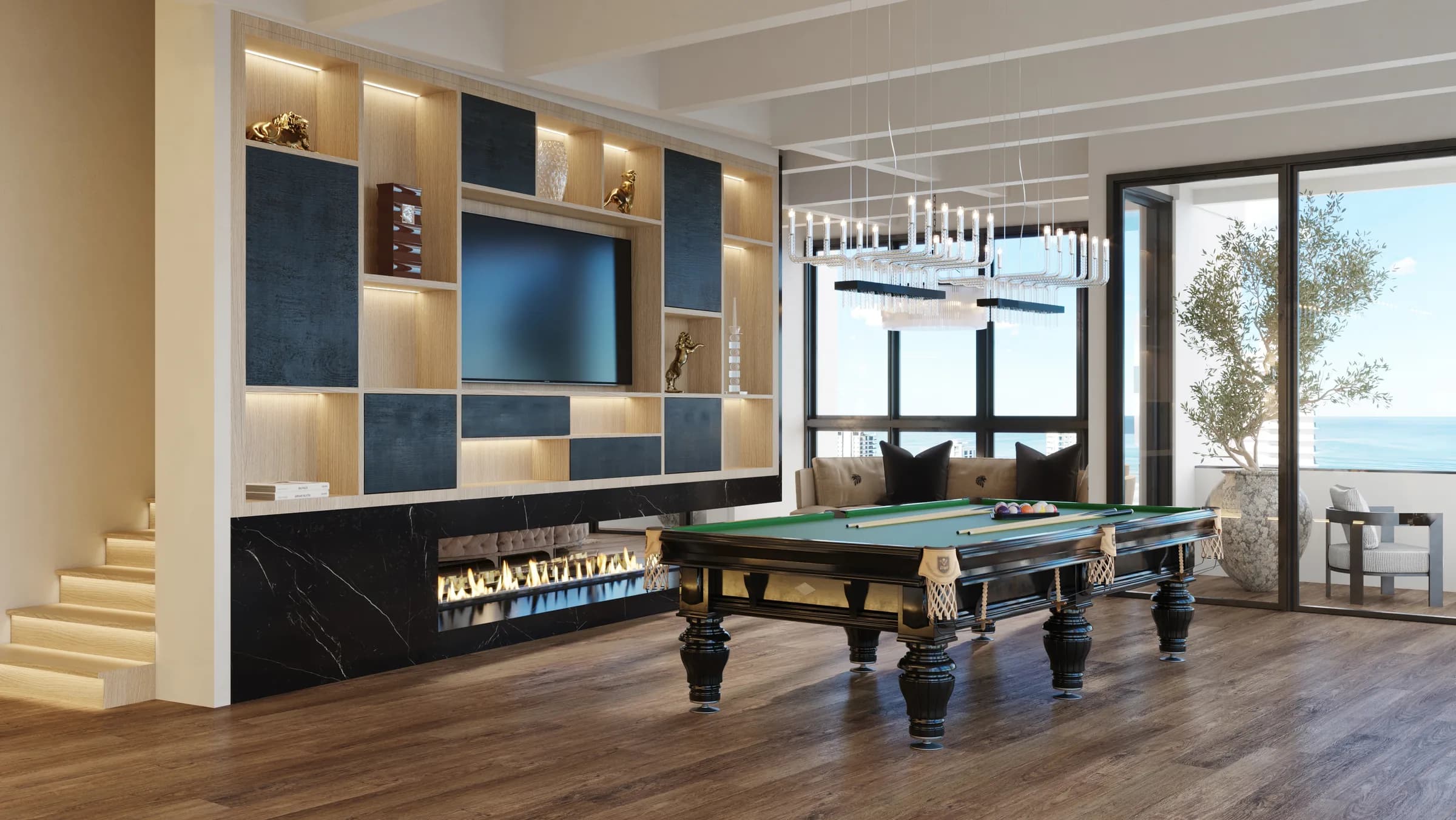
Shoal Point II in Queensland is a Mediterranean coastal resort scheme, and it is the more literal of the two. This is the version where the coastal brief goes north to Europe instead of towards the Australian beach house.
Mermaid Waters on the Gold Coast is soft Mediterranean contemporary. Here the Mediterranean reference sits underneath a contemporary scheme, providing warmth, plaster texture and arched form without committing to a period look.
Two schemes is a smaller body of work than the contemporary or minimalist pages carry, and we would rather say so than pad the page. If Mediterranean is your brief, these are the two to look at.
Adapting it for Australia
Copying a Spanish farmhouse into a Gold Coast canal block does not work, and the reasons are worth understanding.
**Light is harder here.** Australian sun is more intense and higher in the sky than in most of the Mediterranean. Colours that read as warm ochre in Andalusia can read as orange under Queensland light. Palettes usually need to be pulled back a step.
**Humidity changes the finishes.** Lime plaster and unsealed terracotta behave differently in a subtropical climate than in a dry one. Both can work, but the specification has to account for moisture rather than being copied from a European reference photo.
**The openings have to change.** Mediterranean architecture uses small openings to keep heat out. Australian clients want the view and the indoor to outdoor connection. Resolving that tension is most of the design work, and it usually means keeping the deep reveals and shading while enlarging the glass.
**Terracotta on a modern slab.** The look is achievable, but the substrate, movement joints and sealing all need to be drawn rather than assumed.
Mediterranean, Spanish, Tuscan and Greek
These get used loosely, so briefly:
Spanish leans towards dark timber, wrought iron, deeper colour and heavier form. Tuscan leans towards stone, ochre, terracotta and a rustic finish. Greek is the pale one, whitewash and blue, with the strongest contrast. Moroccan brings in pattern, tile and much stronger colour.
Most Australian briefs that say Mediterranean mean something closer to a calm, warm, plastered contemporary interior with arched openings, rather than any of these specifically. That is worth pinning down at the first meeting, because the four take you to very different houses.
Related reading
Coastal interior design covers the eight schemes designed around water, several of which share materials with this approach. Organic modern interior design shares the arched form and natural material without the regional reference. Contemporary interior design is where most Mediterranean briefs in this studio actually land.
Frequently asked questions
What defines Mediterranean interior design?
It is a response to heat and strong light. Thick walls with deep reveals. Plaster and lime finishes with visible texture. Terracotta or limestone floors, and arched openings. The palette comes from landscape rather than trend: clay, olive, ochre and sand, occasionally with deep blue.
Does Mediterranean style suit the Australian climate?
Yes, better than most imported styles, because both regions deal with strong sun, heat and outdoor living. The adaptations needed are in palette, which usually has to be pulled back under harder Australian light, and in specification for humidity.
What is the difference between Mediterranean and Tuscan?
Tuscan is one regional expression of Mediterranean, leaning towards stone, ochre and a rustic finish. Mediterranean is the broader category covering Spanish, Greek, Italian and North African variations, which differ considerably from each other.
Can you do Mediterranean without arches?
Yes. Arches are the most recognisable element but not the essential one. Deep reveals, textured plaster, natural stone underfoot and a landscape palette will read as Mediterranean with entirely square openings.
Is Mediterranean more popular than Hamptons in Australia?
By search demand, yes. Our 2026 study put Mediterranean at roughly 390 searches a month nationally, against 240 for Hamptons. New South Wales searches it 27 per cent more than its share of national demand would predict.