The style edit
Contemporary interior design
Last updated
Contemporary interior design is the largest single body of work in this studio. Fourteen of the schemes published here are contemporary, and they span four countries. That matters because the word covers a very wide range, and two contemporary homes can look nothing alike.
This page explains what the term actually means, how the studio approaches it, and which of our projects sit inside it. If you are trying to work out whether the style suits your house, the projects will tell you more than any definition.
Contemporary is not modern
The two words get used as if they mean the same thing. They do not.
Modern refers to a specific historical movement, roughly 1920s to 1950s, with its own vocabulary of flat planes, tubular steel and open plans. It is finished. It has a date range.
Contemporary means whatever is being designed now. It moves. A contemporary interior from 2010 looks different to one from 2026, because the term describes a moment rather than a rulebook. That is why it is the most searched style term in Australia after Scandinavian and mid-century modern, and also the least precise.
For a client this is useful rather than annoying. It means you are not signing up to a look. You are signing up to a way of resolving your particular house.
What it means in practice here
Across those fourteen schemes a few habits repeat.
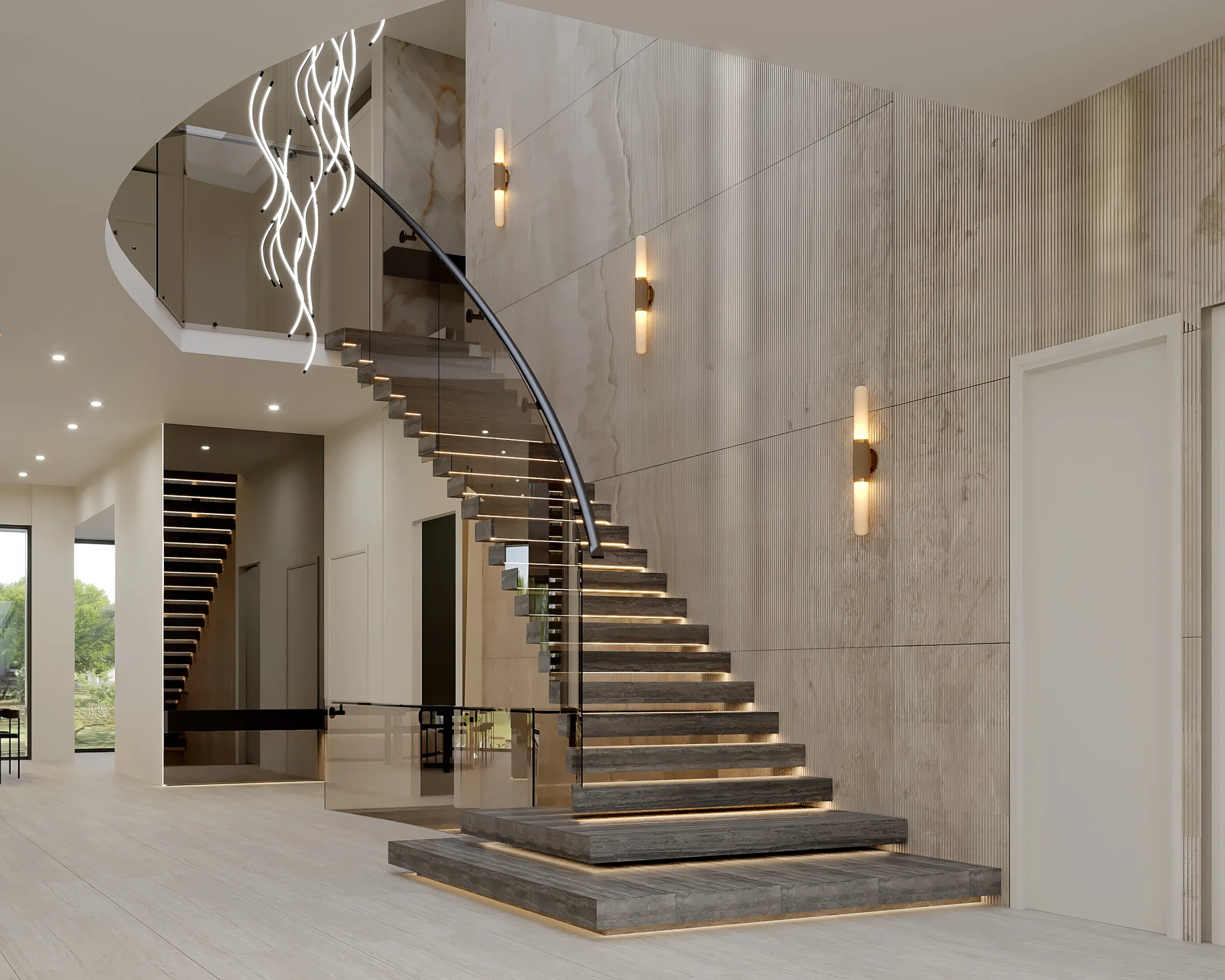
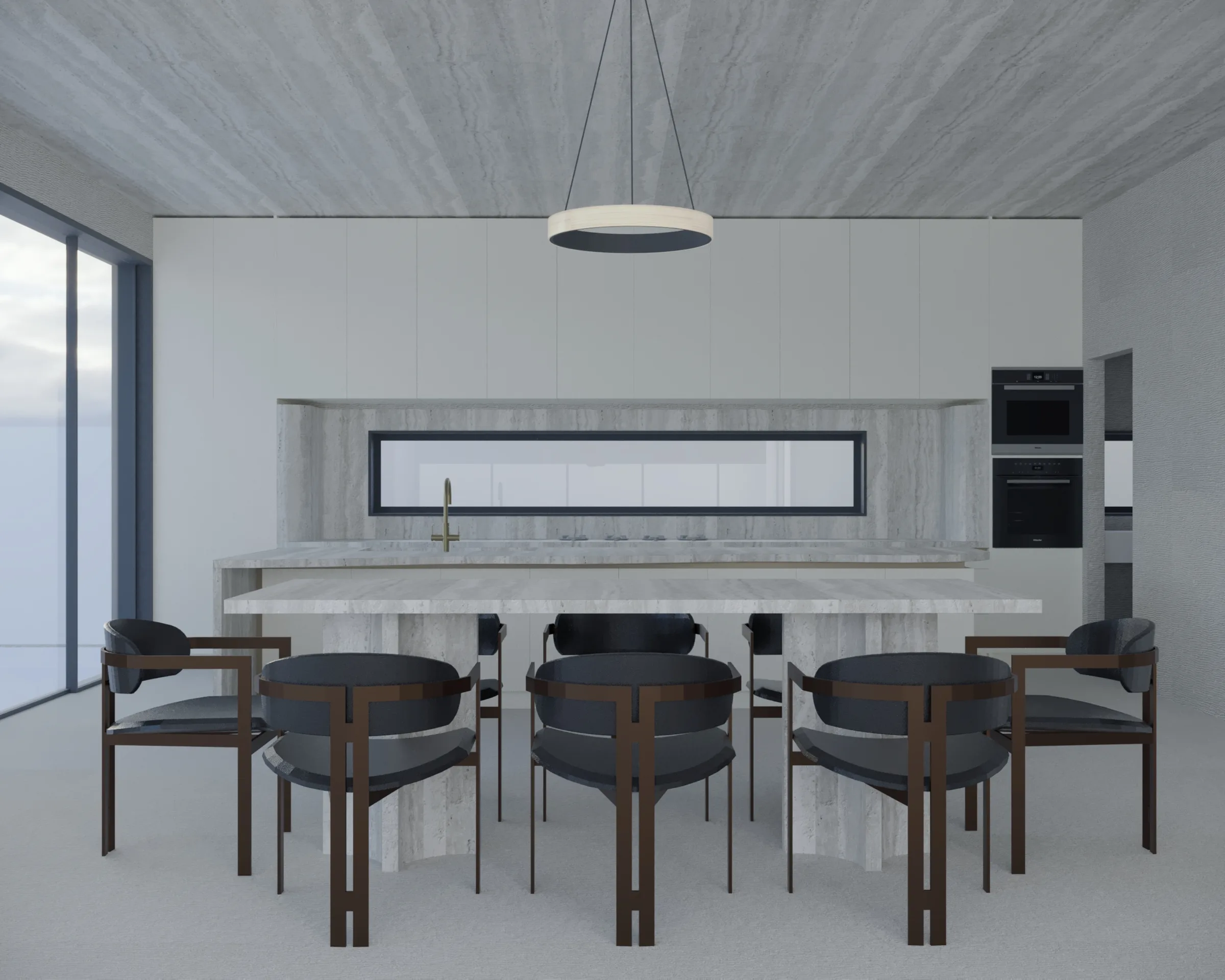
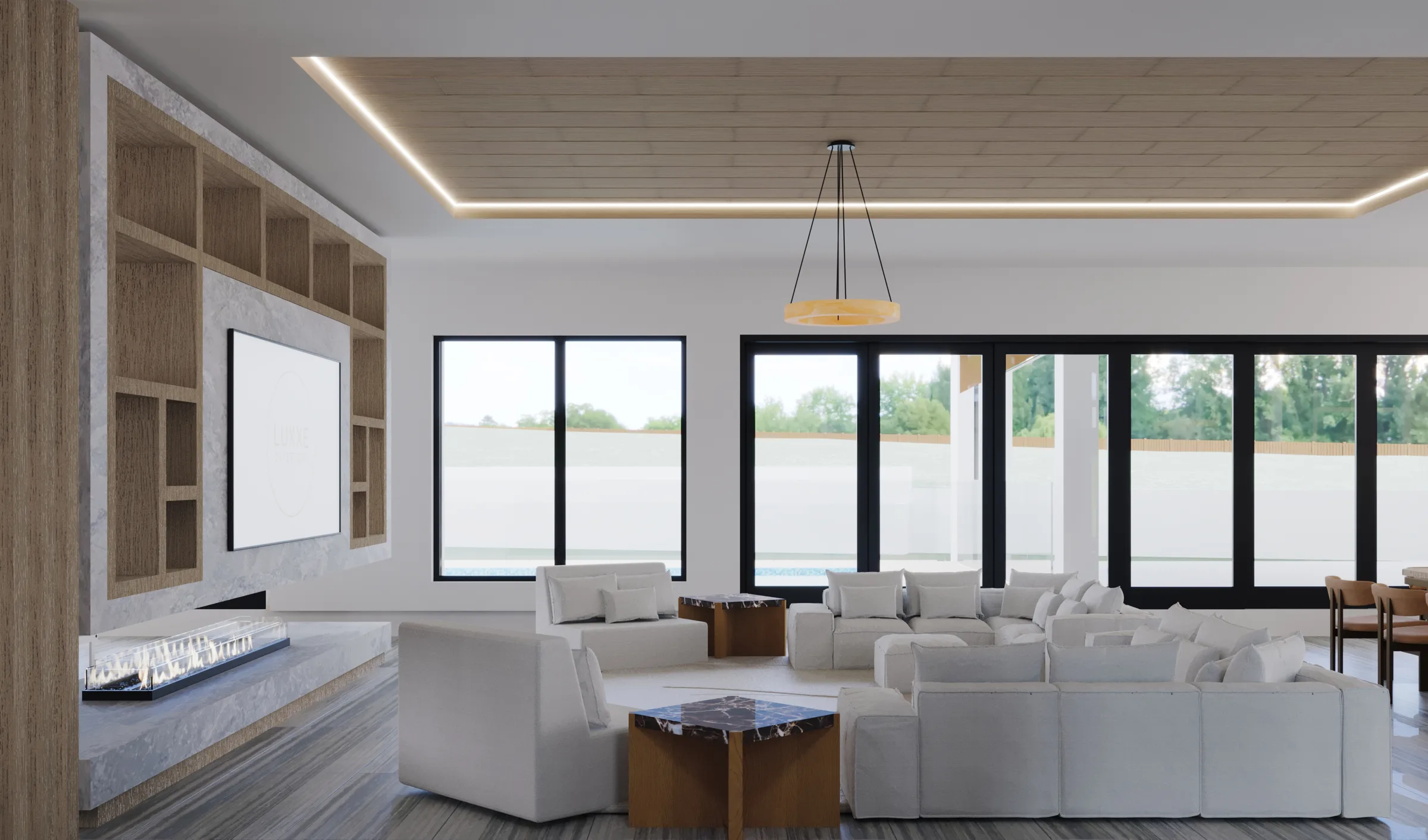
Rooms are planned around light and sightlines before anything is chosen. Material palettes stay narrow, usually three or four materials carried through the whole house rather than a different idea in every room. Joinery is drawn as architecture instead of furniture, so wardrobes, kitchens and wall panelling read as part of the building. Lighting is planned with the room from the first sketch rather than added at the end.
Beyond that, the schemes diverge sharply, which is the point.
The range, in actual projects
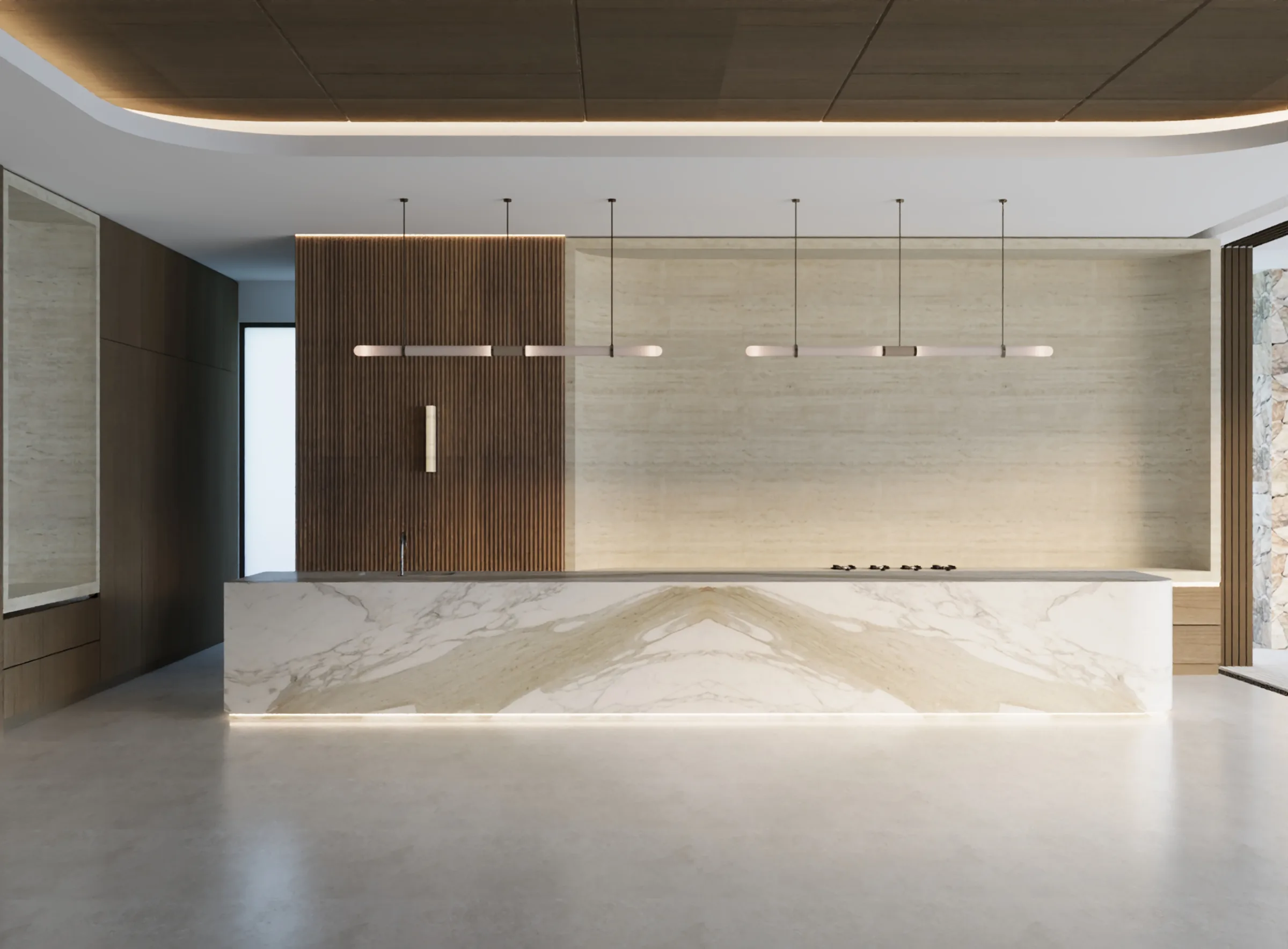
**Warm and soft.** Rosebrook in New South Wales is warm contemporary minimalism. Wavell Heights in Queensland is a softer contemporary scheme. Midland in Texas is warm and architectural, where the structure itself carries the character.
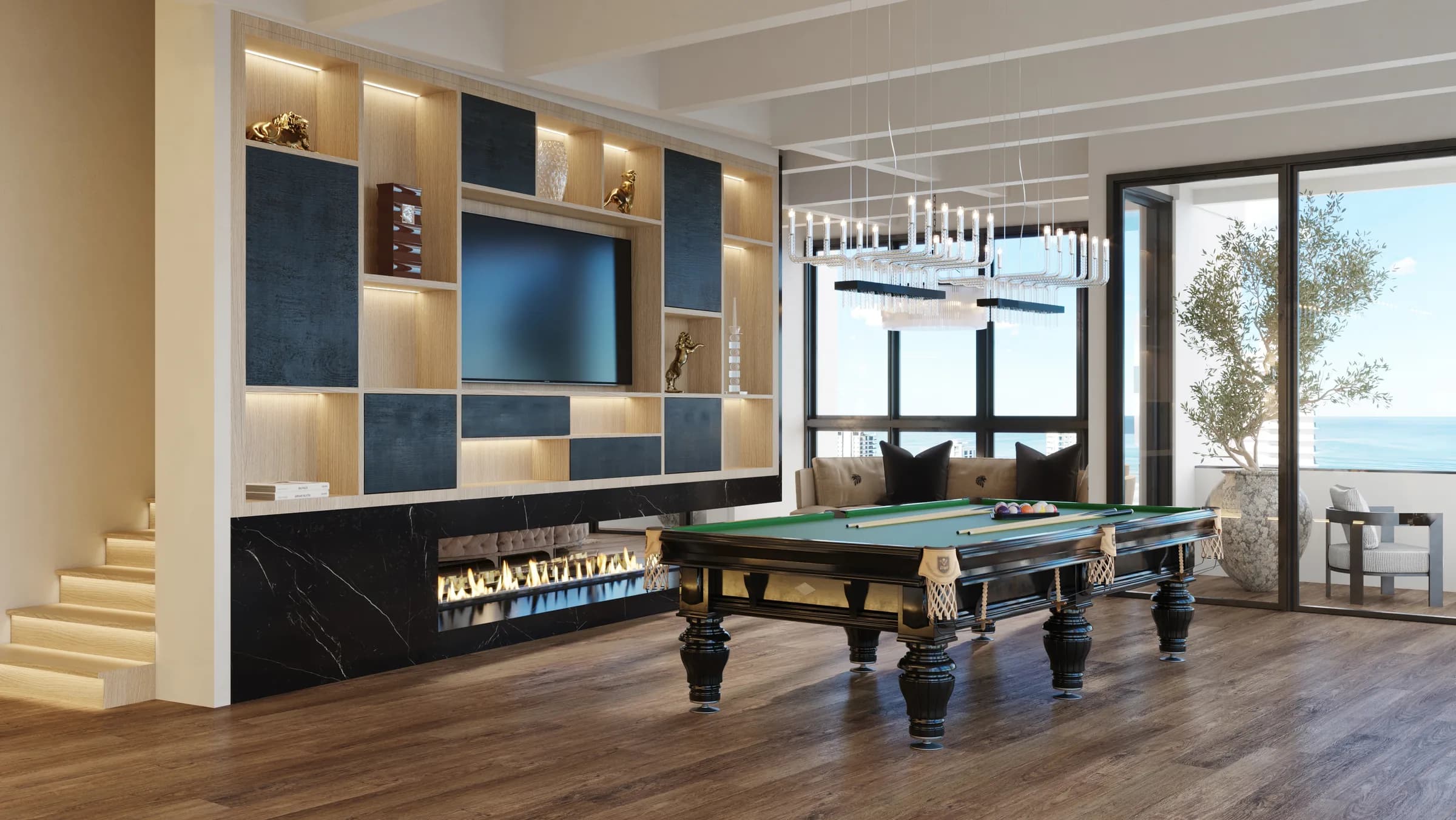
**High contrast and monochrome.** Ryde in Sydney is high contrast contemporary. Blakehurst is monochrome. Worongary on the Gold Coast is contemporary monochrome, and Craigieburn in Victoria takes monochrome towards glamour.
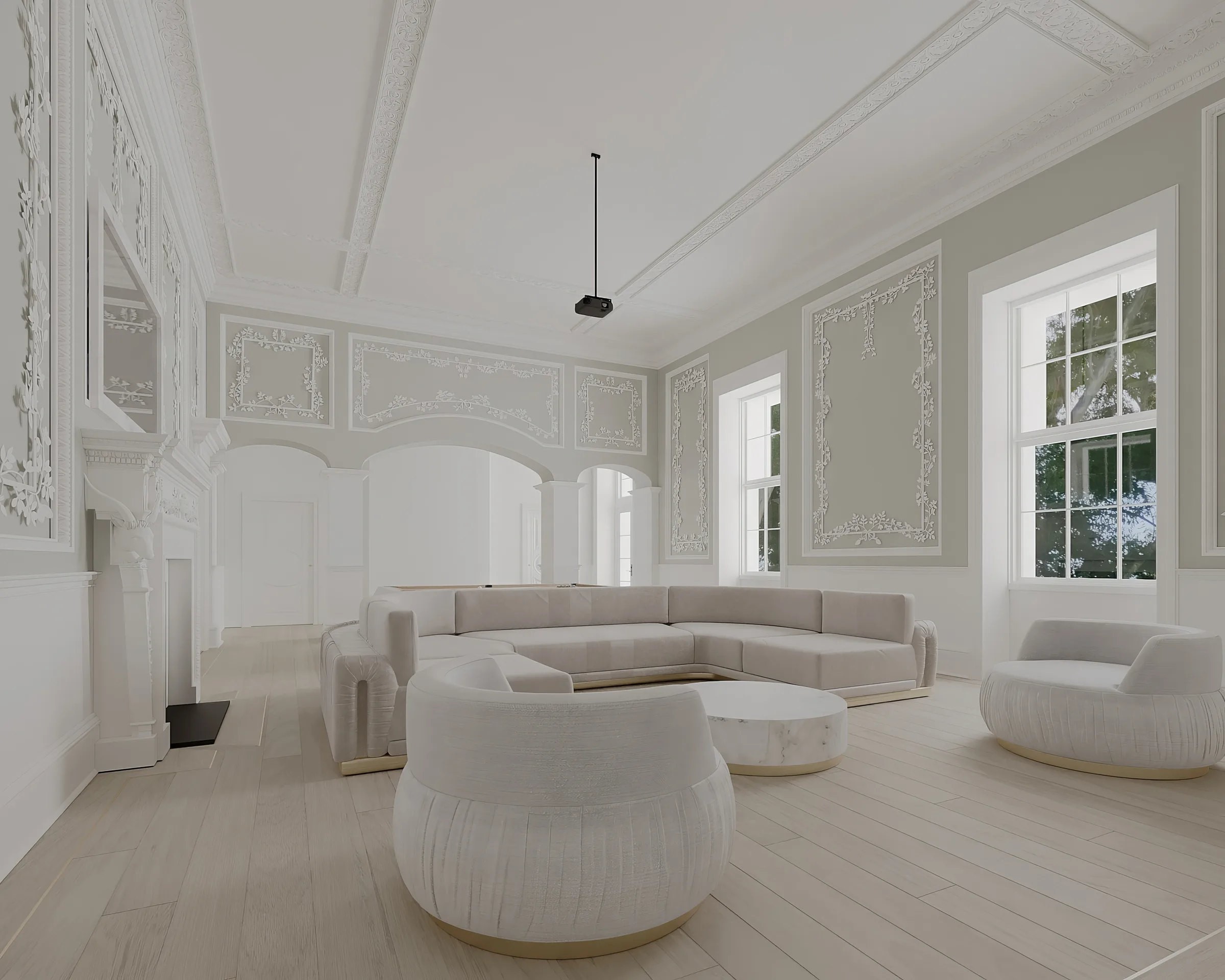
**Contemporary crossed with something older.** Duddingston Guest House in Edinburgh is contemporary neoclassical. It sits inside a Category A listed Palladian house, designed by Sir William Chambers in the 1760s. Mermaid Waters is soft Mediterranean contemporary.
**Contemporary crossed with landscape.** North Parramatta is organic and resort-like. Bundoora in Victoria is a warm contemporary scheme organised around wellness.
**Overseas.** East Hills in New York is tailored contemporary. Huntington Beach in California is soft contemporary minimalism.
Fourteen projects, no two the same. If a studio shows you fourteen contemporary homes and they all look alike, you are looking at a signature rather than a service.
Where contemporary goes wrong
Three failures come up repeatedly, and all three are avoidable at the drawing stage.
**Choosing finishes before the plan is settled.** Contemporary interiors live or die on proportion. A beautiful stone specified into a badly proportioned room is an expensive way to make the proportion more obvious.
**Treating it as an absence of decoration.** Contemporary is not the same as empty. Rooms with nothing in them read as unfinished rather than restrained, and the layering is what makes them warm.
**Too many materials.** The most common cause of a contemporary interior feeling busy is not colour, it is material count. Six stones and four timbers across a house will fight each other no matter how good each one is.
How the work is documented
Every scheme is developed in 3D, so you see the rooms before anything is ordered. On projects that call for it, a virtual reality walkthrough lets you stand in them at eye height. Drawings, schedules and specifications go to your builder, so pricing happens from documents rather than conversations.
Documentation matters more here than in a decorated interior. The effect depends on things fixed during construction: reveal depths, shadow gaps, ceiling junctions, where a wall stops. Those are drawing decisions, not shopping decisions.
Related reading
Contemporary overlaps with several of the studio's other approaches. Minimalist interior design is the more disciplined end of it. Organic modern interior design brings landscape and natural form into the same framework. Our study of Australia's most searched interior design styles puts contemporary at roughly 480 searches a month nationally.
Frequently asked questions
What is the difference between contemporary and modern interior design?
Modern is a historical movement with a date range, roughly the 1920s to the 1950s, and a fixed vocabulary. Contemporary means what is being designed now, so it changes over time. A contemporary interior can borrow from modernism, but it is not obliged to.
Does contemporary mean cold or minimal?
No. Contemporary describes the period, not the temperature. Several of the schemes here are deliberately warm, using timber, textile and layered light. Minimalism is a separate decision you can make inside a contemporary framework.
Is contemporary design going to date?
Every style dates, including this one. What ages slowest is proportion, natural material and good lighting. What ages fastest is a trend finish applied across a whole house. Spend on the parts that are hard to change and stay flexible on the parts that are not.
Can contemporary work in an older or heritage house?
Yes, and Duddingston Guest House is the example. Let the original architecture lead. Design the new work so it reads as clearly new, not as an imitation of the period. Pretending is what looks wrong, not contrast.
How many materials should a contemporary home use?
As a working rule, three or four carried through the whole house, with one or two accents. Material count is the most common reason a contemporary interior feels restless, and it is much easier to control on a schedule than after installation.