The style edit
Marble vs travertine: which is better for a coastal home?
Last updated
Travertine is usually the better answer near the water, and marble is usually the better answer for a single dramatic surface indoors. Both are calcium carbonate, so both etch when acid touches them. What separates them is structure: travertine is porous and forgiving, marble is dense and shows everything.
Key takeaways
- Travertine handles salt air, bare feet and pool surrounds better than marble, and its honed or tumbled finish stays safe when wet.
- Marble delivers movement and depth that travertine cannot, which is why it belongs on an island, a fireplace or a bathroom wall rather than underfoot through a whole house.
- Both etch. Neither is a low-maintenance stone, and any supplier who says otherwise is selling.
- In a coastal Queensland home the common answer is both: travertine through the floors and outdoor living, marble on one or two feature surfaces.
How they differ
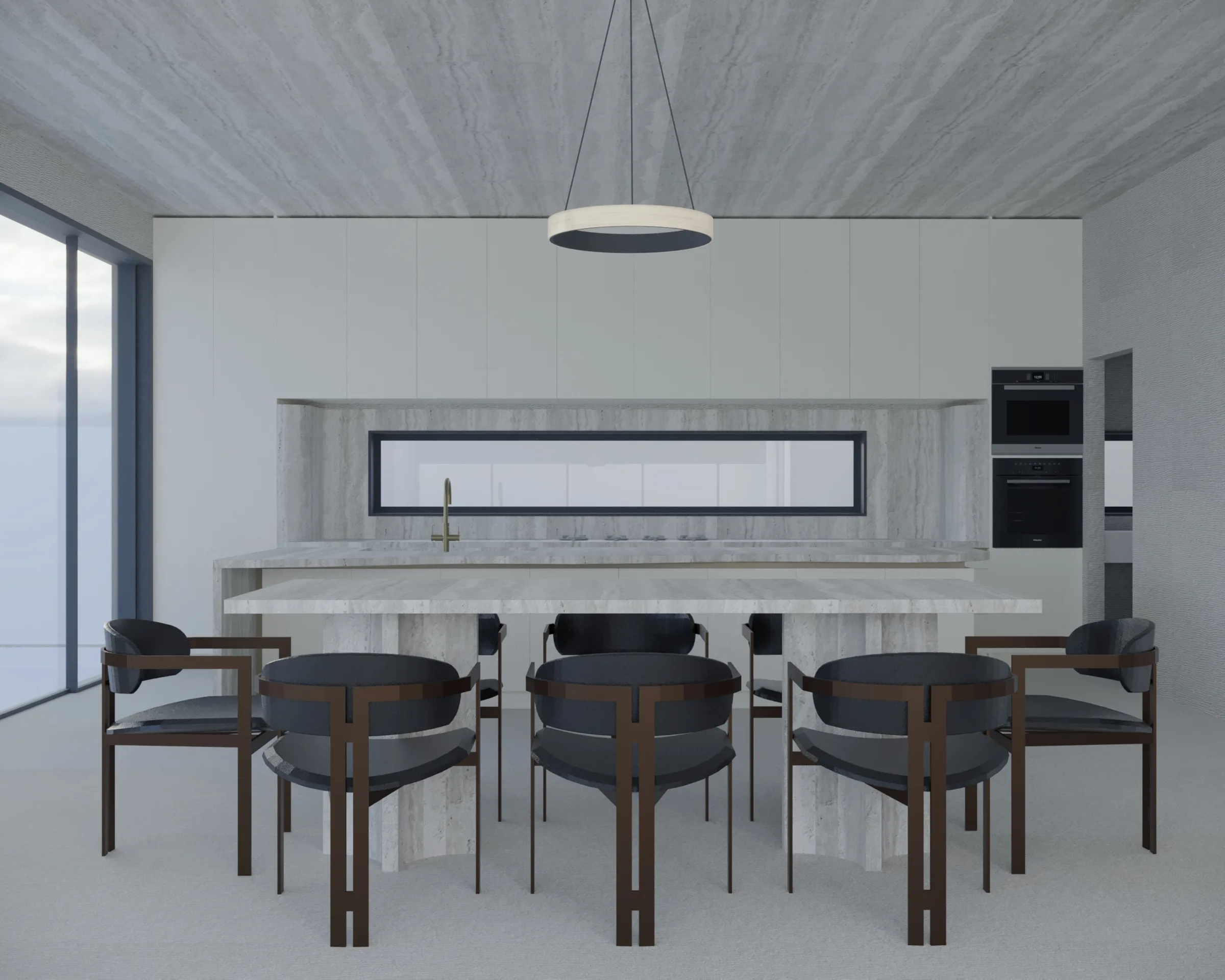
Travertine forms in mineral springs, which is why it has holes. Those voids are either filled at the factory or left open in a tumbled finish. The stone reads warm, matte and slightly textured, and it is far more tolerant of the things that happen around a pool.
Marble forms under heat and pressure, so it is denser, takes a polish, and carries the veining people actually buy it for. That density is also why a scratch or an etch mark sits there in plain sight rather than disappearing into texture.
Which survives a coastal house
Salt air attacks the sealer, not the stone. Both need resealing, travertine more often because it is porous. What matters more is what happens underfoot. Wet marble, especially polished marble, is genuinely slippery, and around a pool that is a safety question rather than an aesthetic one. Honed or tumbled travertine keeps grip when wet and stays cooler in direct sun, which is why it appears on so many Queensland pool surrounds.
Sand is the other factor. Grit tracked in from a beach acts like sandpaper on a polished floor. Travertine's texture hides that wear; polished marble records it.
Where marble still wins
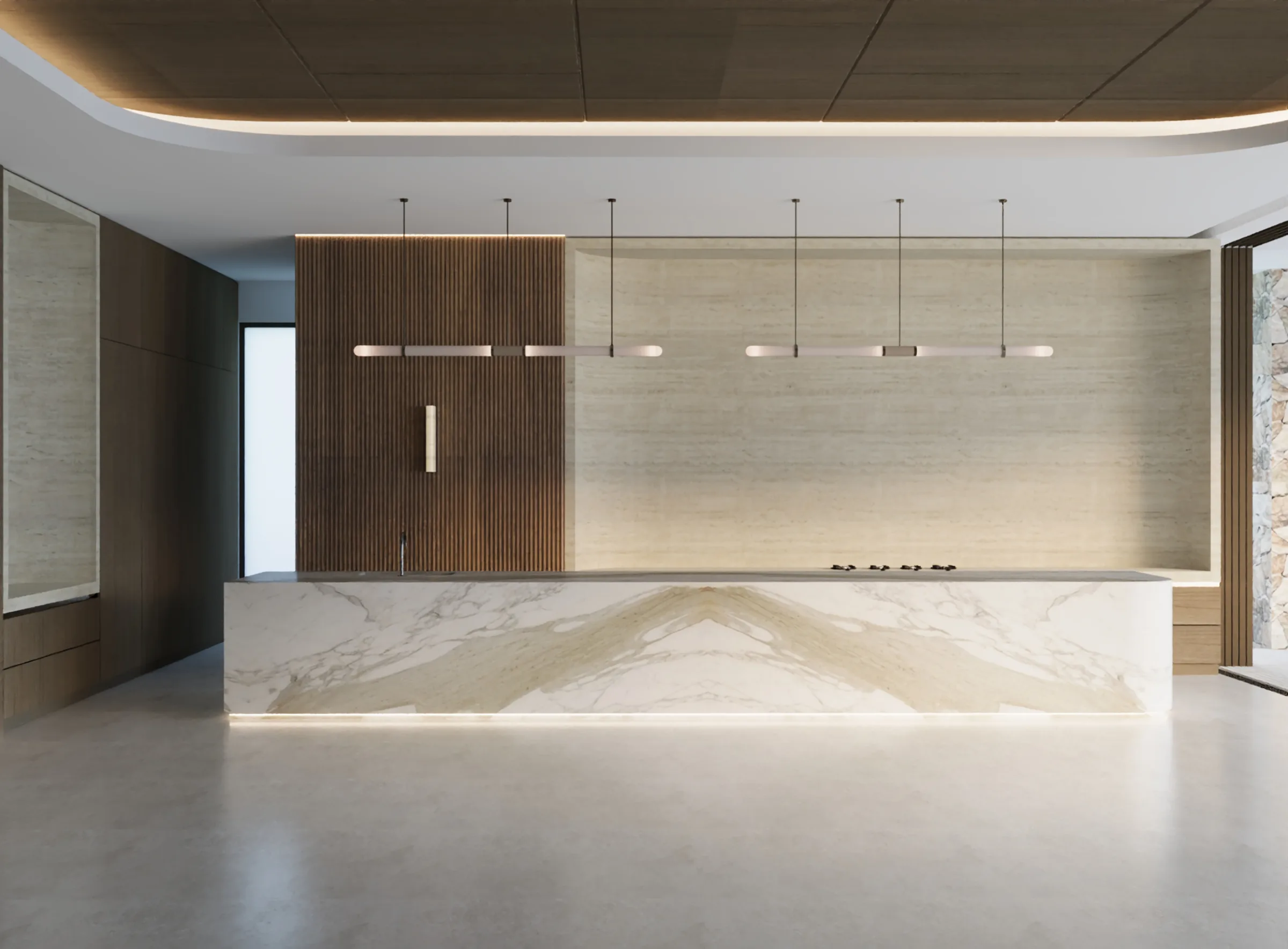
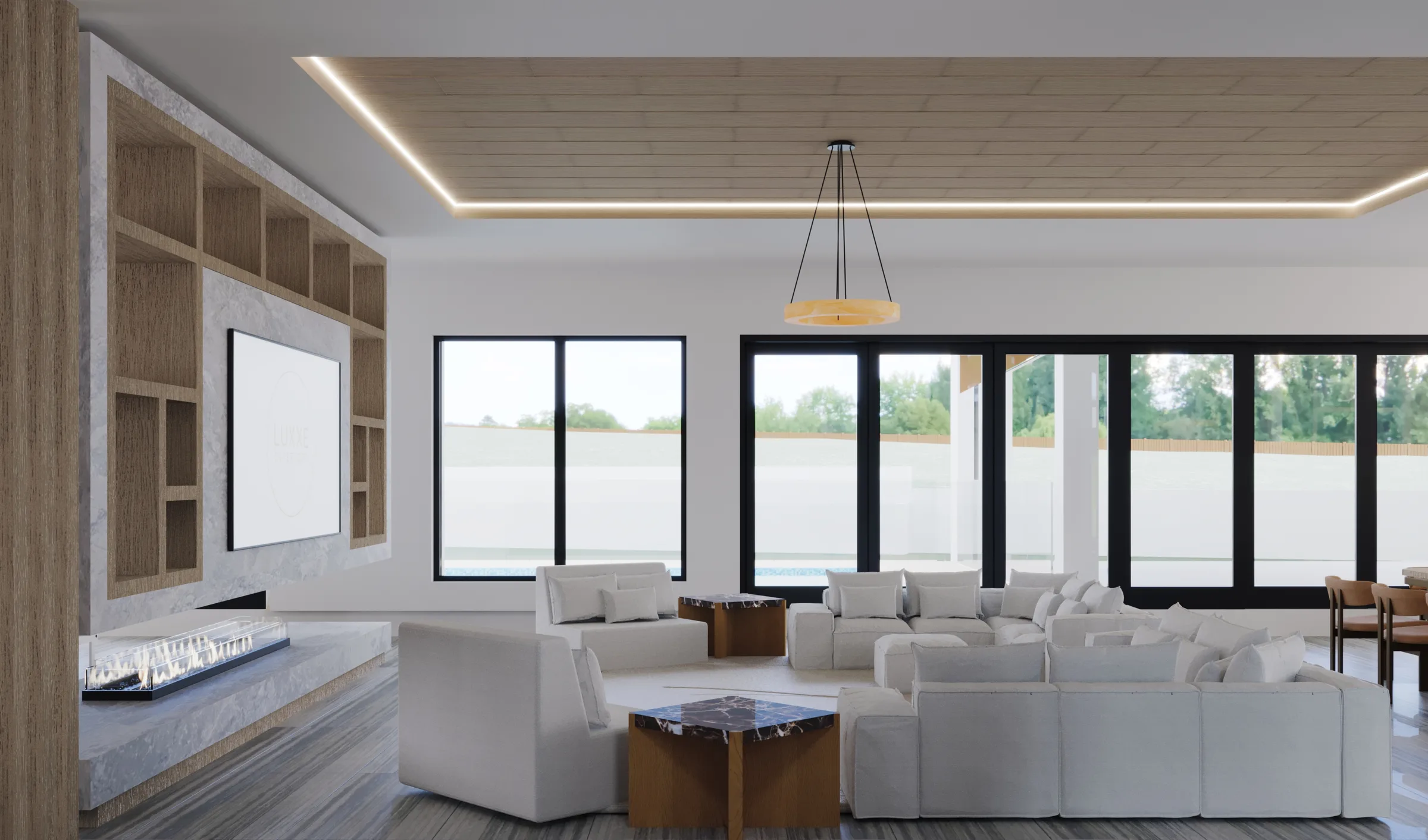
Nothing else does what a good marble slab does on a vertical surface or an island. Book-matched veining across a splashback, a fireplace face, a bath surround: these want drama, they are not walked on, and they are small enough that the cost of a beautiful slab is contained.
Cost
Travertine is generally the cheaper of the two, though a premium filled and honed travertine can pass an ordinary marble. Marble ranges enormously, and the price is driven by the block rather than the name on the label. Installed cost also swings on thickness, edge detail and how much waste the pattern forces.
What most coastal projects end up doing
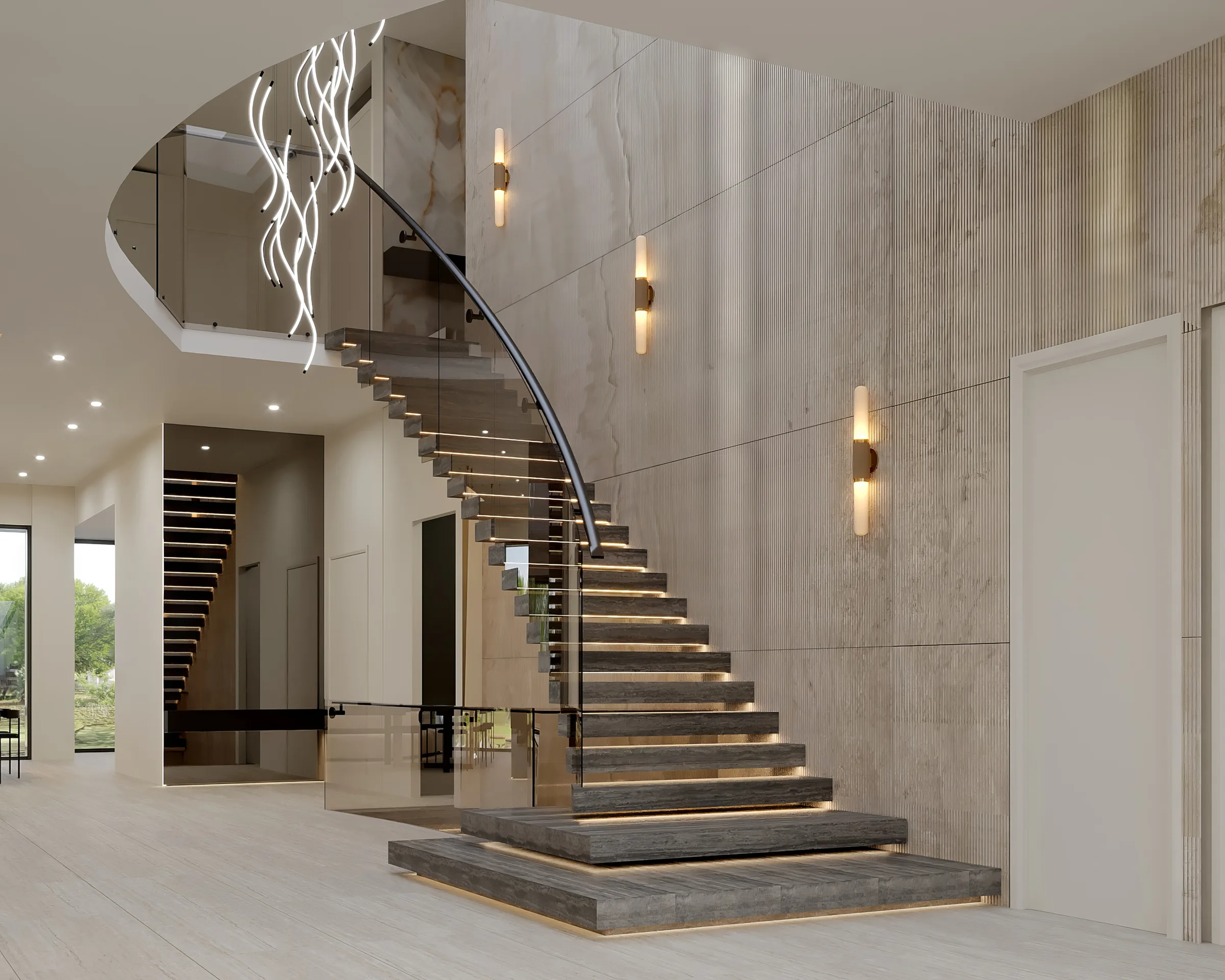
Travertine on the floors and through the outdoor living, so the house is comfortable barefoot and survives the pool. Marble held back for one or two surfaces where people stop and look. That split gets the material honesty of stone throughout without asking a soft, dense, polished surface to do a job it was never suited to.
Frequently asked questions
Does travertine stain more easily than marble?
Yes, because it is more porous. A good impregnating sealer handles most of it, but travertine needs resealing more often, and spills on an unsealed slab will mark.
Can you use marble outdoors in Queensland?
You can, but honed rather than polished, and accept that it will patina quickly. Most projects use travertine or granite outdoors and keep marble inside.
Which is better for underfloor heating?
Both conduct heat well. Travertine's texture makes it more comfortable underfoot at any temperature.