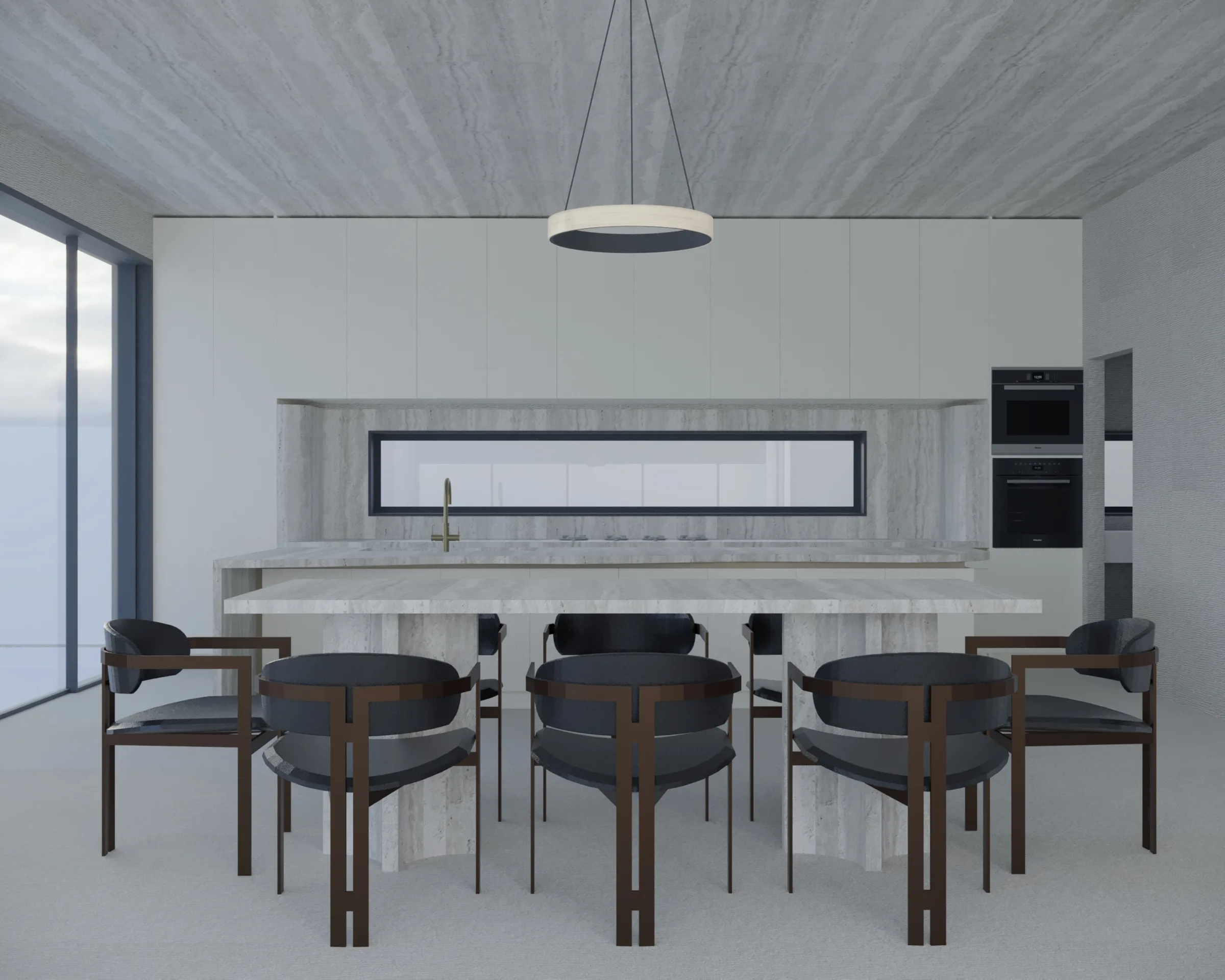

How do you choose stone for a kitchen island?
Last updated
By standing in front of the actual slab, not by choosing a name from a sample chip. Natural stone varies block to block, and the piece that becomes your island is the piece you reserved. The decisions that matter are material, slab selection, edge profile and finish, roughly in that order.
The materials
Marble is calcite: it etches when acid touches it and it will patina. In a working kitchen it will not stay pristine, and clients who love marble are generally the ones who like that it ages. Clients who want it to look new in five years should choose something else.
Quartzite is the usual answer for people who want marble's movement with far better resistance. It is genuinely hard, though a lot of stone sold as quartzite is softer than the label suggests, so ask for the yard's testing.
Granite is the most durable and the least fashionable, which makes it undervalued rather than wrong.
Engineered stone is consistent and predictable. Note that Australia banned the manufacture, supply and installation of engineered stone containing crystalline silica from 1 July 2024 on health grounds; check current compliance before specifying.
Selecting the slab
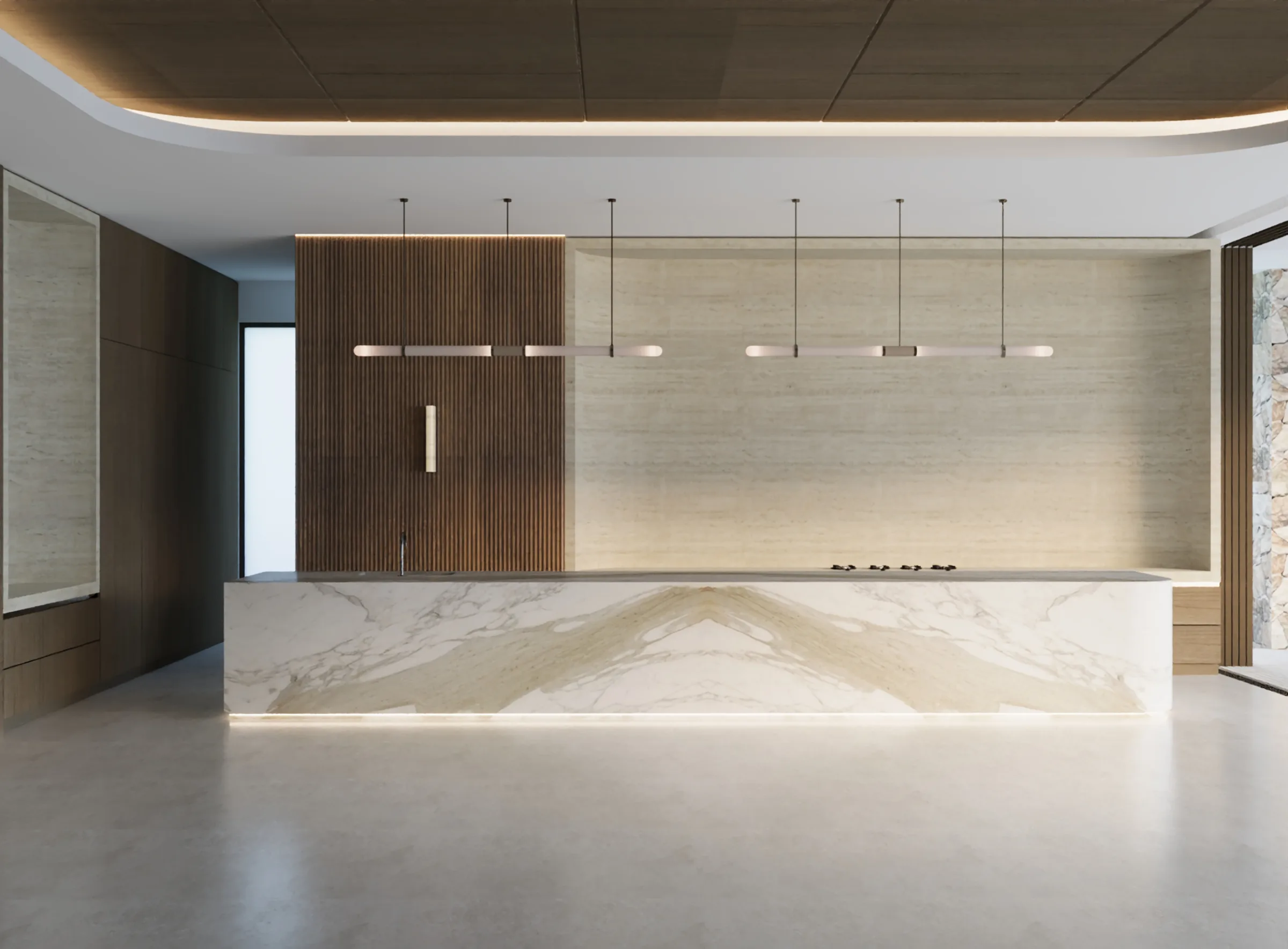
Go to the yard. Photograph the slab wet, which is roughly how it looks sealed. Mark the section you want on the island. A dramatic vein through the middle is a decision, not an accident. If the island and splashback should relate, reserve them from the same block on the same day.
Edge and finish
A thin mitred edge reads contemporary; a thick one reads solid and costs more in stone. Honed hides etching better than polished and shows fingerprints less. Leathered sits between the two and is forgiving in a busy family kitchen.