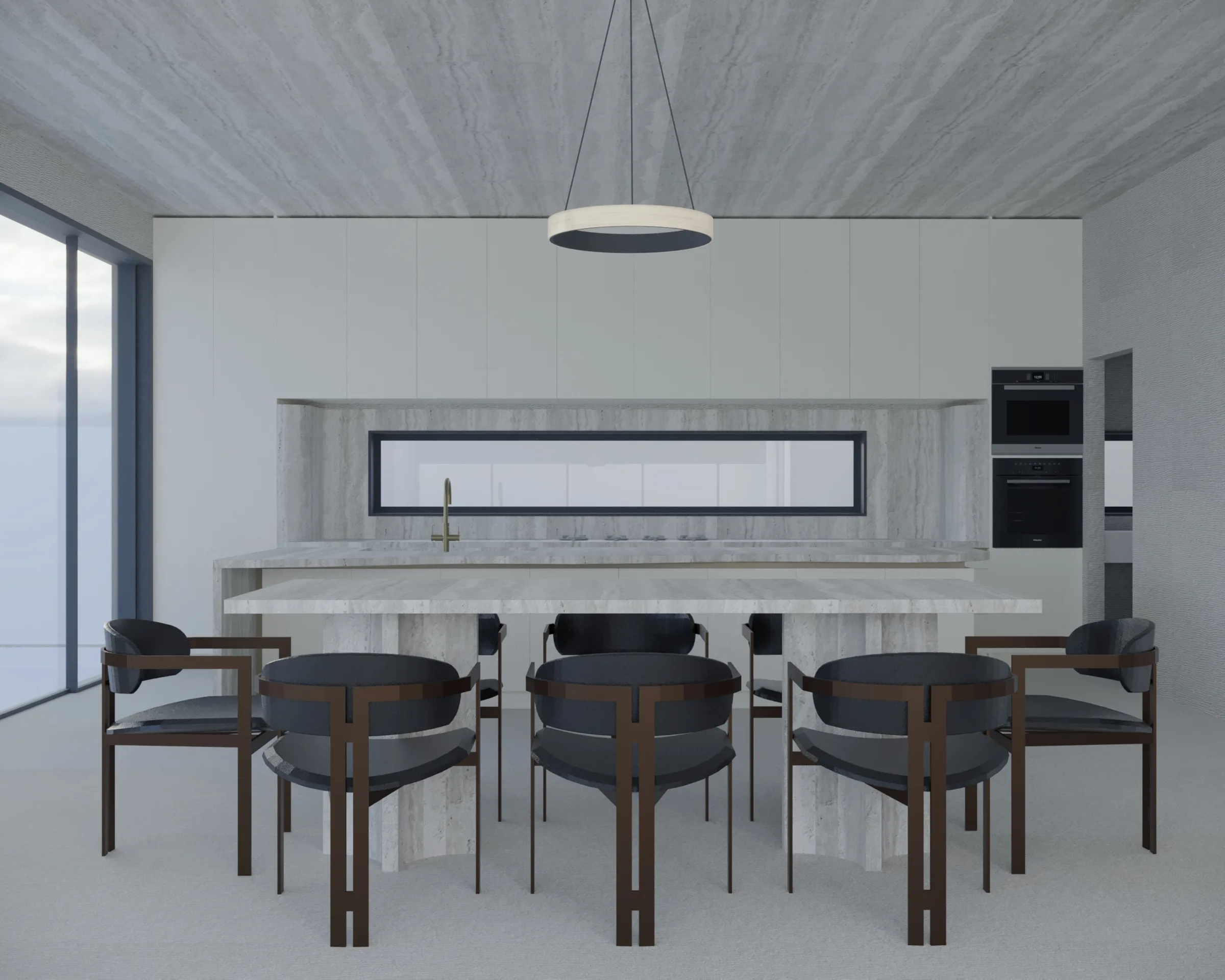

What is book-matched stone?
Last updated
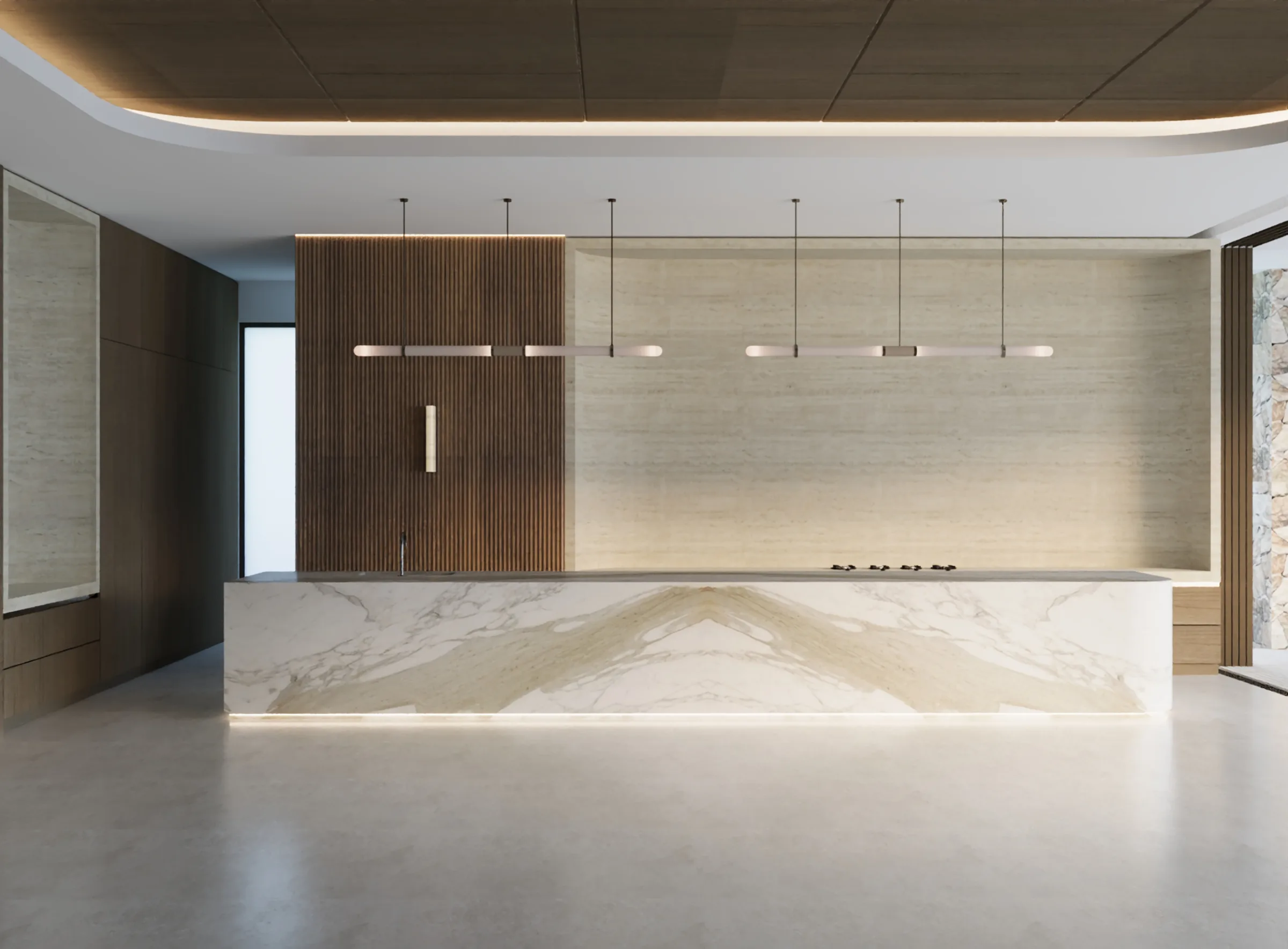
Book-matching is cutting a stone block into slabs and opening consecutive slabs like the pages of a book, so the veining mirrors across the join. Done well the seam disappears into a symmetrical pattern. It only works if the slabs come from the same block, in sequence, and are kept together from the quarry onward.
Why it has to be decided early
You cannot book-match stone you bought at different times. The slabs must be sequential from one block, and once a yard splits a bundle the opportunity is gone permanently. That means the decision happens at the slab yard, months before anyone tiles anything. It is why the studio goes and stands in front of the stone rather than choosing from a photograph.
It also means buying more than the job needs. A book-matched splashback and island might use four slabs where two would have covered the area, because the pattern has to land where you want it.
Where it earns its place
A single dominant surface: a splashback that runs full height, a fireplace, the face of an island, a bathroom wall behind a freestanding bath. The effect depends on the eye reading symmetry at a glance, so it wants an uninterrupted plane and enough distance to take it in.
Where it does not
Small or broken areas. If the run is chopped up by windows, tap holes and shadow lines, nobody sees the mirror and you have paid a great deal for a pattern that never resolves. Busy stone in a small room is also a poor trade. The more dramatic the veining, the more space it needs.
Practical notes
Ask the yard to photograph the slabs dry-laid side by side before purchase, and mark the sequence. Confirm your stonemason has book-matched before; the setting-out is unforgiving and a misread of a few millimetres shows.